Find out what real clients
have to say

Over 44,000 People in Switzerland Have Used the
Swiss Property Owners Association to Achieve Better
Results in Buying or Selling Their Home

Find out what real clients have to say

Over 44,000 People in Switzerland Have Used the Swiss Property Owners Association to Achieve Better Results in Buying or Selling Their Home

Geopolitical shock hits the global economy

The effects of the Iran war are massive: the blockade of key trade routes such as the Strait of Hormuz is driving up oil and gas prices and increasing inflation risks worldwide. At the same time, economic momentum in Europe and other industrialised nations is suffering significantly from the increased costs.

This combination of inflation and weaker growth – often referred to as „stagflation“ – has direct consequences for interest rates, investments and therefore also for property markets.

Swiss property as a safe haven

Against this backdrop, Swiss property is becoming increasingly attractive. According to a recently published UBS analysis, international investors see it as a stable hedge against geopolitical risks.

A key driver is the strong Swiss franc, which also appreciates in times of crisis and safeguards investments. Luxury and holiday properties in top destinations such as St. Moritz and Gstaad, where international buyers continue to play a key role, remain particularly popular.

Mortgages: stability despite global pressure

Despite global inflationary pressure as a result of the war in Iran, interest rates for money market mortgages in Switzerland are expected to remain stable. Long-term fixed-rate mortgages, on the other hand, are showing a slight upward trend, as rising energy prices and inflation are also having an impact on the capital markets in this country.

For homeowners, this means little change in the short term, but rising financing costs in the long term.

Property investments benefit

Listed property investments are also proving robust. While many stock markets are suffering from the consequences of the war in Iran, property values are showing comparatively stable development.

However, this stability comes at a price: valuations are high and experts are warning that rising interest rates or an escalation of the conflict could lead to corrections.

Conclusion: Winners of the crisis – with risks

The Iran war is shifting capital flows worldwide – away from insecure regions and towards stable markets such as Switzerland. Property is benefiting from this in particular.

However, the situation remains fragile: if the conflict escalates further, rising interest rates and an economic slowdown could also put the previously robust Swiss property market under greater pressure.

The Swiss Property Owners Association (Grundeigentümerverband Schweiz) has been recognized in the March edition of the Swiss business magazine BILANZ as one of the “Top Real Estate Experts in Switzerland 2026” in the following four categories:

  • Real Estate Valuation
  • Buying and Selling (Real Estate Brokerage)
  • Real Estate Financing
  • Luxury Real Estate Expertise

We see these distinctions as confirmation that our guiding principle, “Investing in real estate intelligently,” is the right path forward. Only a holistic advisory approach can meet the demands of an increasingly complex market environment.

With more than 60 employees, the Swiss Property Owners Association will continue to dedicate its expertise and commitment to supporting our more than 70,000 members with comprehensive advice and practical assistance.

Read the official article in BILANZ here.

Ageing Switzerland

Demographic change is in full swing in many regions of the world and in Europe in particular. Switzerland is no exception. While the birth rate has reached a record low of 1.29 children per woman in 2024, life expectancy is rising continuously and, according to the Federal Statistical Office, will be just under 86 years for women (as of 2024). As a result, the number of people in employment is steadily decreasing, while there are more retirees and senior citizens. The number of families is also falling accordingly, especially those with more than one child.

Effects on the property sector

According to Swissinfo.ch, the cantons of Ticino, Bern, Neuchâtel, Jura, Appenzell Ausserrhoden, Nidwalden, Obwalden, Graubünden, Glarus and Schaffhausen are already showing signs of stagnating demand in sales, which can be seen, for example, in the increased duration of advertisements. Large family flats and detached houses are particularly affected, as older people are no longer asking for these sizes, or only to a lesser extent.
The number of transactions is also falling, as people over 65 are making fewer changes to their current living situation.

Conclusion: More affordable housing for families soon?

The cantons listed include many that have a high proportion of rural and in some cases structurally weak areas. These cantons are the first to feel the effects of demographic change. However, sooner or later the effects will affect the whole of Switzerland. In terms of demand, the developments are likely to mean the following: Flats up to 4.5 rooms and smaller are likely to be in greater demand, while larger flats and single-family homes will be available in higher numbers, which will be reflected in lower prices.

T

The Swiss real estate market is on the verge of change. New living concepts are becoming increasingly important and are changing the way we live. Whether co-living, micro-apartments, smart homes or sustainable living – innovative solutions are in demand like never before. These trends not only offer answers to current challenges such as urbanization, demographic change and housing shortages, but also open up exciting opportunities for investors and property buyers.

In this article, we present the most exciting residential concepts that are currently shaping the Swiss real estate landscape or are likely to do so in the coming years. We look at how furnished apartments and studios offer flexibility and comfort, the advantages of smart homes and which international trends could also gain a foothold here in Switzerland. Using practical examples, we show how these developments are influencing the market and what potential they hold for the future.

Co-Living: Living Together, Thriving Individually

Micro-Apartments: Small but Stylish

Smart Homes: The Future is Digital and Connected

Sustainable Living: Ecologically and Economically Sensible

Intergenerational Living: Together Instead of Alone

Digital Nomads: Living Without a Fixed Residence

A Look Across the Border: International Trends

Conclusion and Outlook

Co-Living: Living Together, Thriving Individually

Co-Living is a housing concept that has gained worldwide popularity in recent years and is now gradually arriving in Switzerland. It offers a modern response to rising housing costs and the desire for community.

Definition and Concept of Co-Living
Co-Living refers to communal living in specially designed spaces. Unlike traditional shared housing, Co-Living spaces feature private rooms or apartments and generous communal areas such as kitchens, living rooms, and recreational spaces. This form of housing is particularly aimed at young professionals, digital nomads, and students who value flexibility and social interaction.

Advantages and Challenges of Co-Living

Advantages:

  • Cost Efficiency: Sharing communal spaces can lower housing costs.
  • Community: Co-Living promotes social interaction and a sense of community.
  • Flexibility: Many Co-Living options are available for short-term leases with flexible rental agreements.
  • Services: Often, additional services such as cleaning, internet, and events are included in the rent.

Challenges:

  • Privacy: Despite private retreats, communal living can limit privacy.
  • Conflict Potential: Living with many different people requires willingness to compromise and conflict management.
  • Cultural Differences: Especially in international Co-Living spaces, different lifestyles and habits can clash.

Examples of Co-Living Projects in Switzerland
There are already several successful Co-Living projects in Switzerland:

  • LivingTown, Zurich: An innovative Co-Living concept in Zurich Altstetten, where residents can work and live in a creative environment.
  • Nest, Basel: This project offers modernly equipped apartments and large communal areas, targeting young professionals and students.

Market Opportunities and Target Groups
Co-Living has great potential in Switzerland, especially in urban areas with high rental prices. The main target groups are young professionals, digital nomads, students, and expats seeking short-term and flexible housing solutions. Investors can benefit from the increasing demand for such housing concepts by investing in relevant projects or developing their own Co-Living spaces.

Micro-Apartments: Small but Stylish

Micro-apartments are another innovative housing concept gaining popularity in Switzerland. These compact units offer all necessary amenities despite their small size and are particularly attractive to people who want to live and work in urban areas.

What Are Micro-Apartments?
Micro-apartments are small, well-designed living spaces typically ranging from 20 to 40 square meters. They feature efficient space utilization and often include multifunctional furniture to make the most of the limited area. The fittings are usually modern and high-quality, maximizing comfort in a small space.

Advantages and Disadvantages of Small Living Spaces

Advantages:

  • Sustainability: The smaller footprint and often energy-efficient design make micro-apartments an eco-friendly living option.
  • Cost Efficiency: Due to the smaller size, rent is often lower than that of larger apartments.
  • Central Locations: Micro-apartments are frequently found in urban centers, offering short commutes to work and leisure activities.

Disadvantages:

  • Limited Space: Lack of storage and limited space can be challenging, especially for those with a lot of belongings.
  • Reduced Privacy: Small living spaces offer fewer retreat options, which can impact the need for privacy.
  • Social Isolation: Designed often for single occupancy, it can be harder to build social connections.

Current Projects and Developments in Switzerland
Many Swiss cities are seeing the rise of micro-apartment projects responding to the growing demand for small, urban living spaces:

  • City Pop, Zurich: A modern micro-apartment concept offering flexible leases and fully furnished units, ideal for commuters and young professionals.
  • BaseCamp, Geneva: Targeted at students, this project provides small, well-equipped apartments near the university and public transport.

Demand and Investment Potential
The demand for micro-apartments is steadily increasing, especially in urban areas with high rents and limited housing. Investors find micro-apartments attractive due to high rental income per square meter and stable demand. Additionally, they offer a solution to the growing urban population and limited space in cities.

Micro-apartments provide an efficient and sustainable answer to the challenges of urban living and are expected to gain even more importance in the future.

Smart Homes: The Future is Digital and Connected

The ongoing digitalization has not spared the living space. Smart homes, intelligent dwellings controlled by modern technologies, are on the rise and offer numerous benefits for residents.

Definition and Features of Smart Homes
Smart homes are living spaces equipped with connected devices (Internet of Things, IoT) and systems that can be controlled and automated via the internet. This includes intelligent lighting, heating and air conditioning systems, security systems, household appliances, and entertainment electronics. These systems can be operated via smartphones, tablets, or voice assistants, providing residents with greater comfort, security, and energy efficiency.

Technologies and Their Applications in Living Spaces

  • Intelligent Lighting: Automatically adjusts to the time of day and the presence of residents. Example: Philips Hue.
  • Smart Thermostats: Control heating and air conditioning to optimize energy consumption. Example: Google Nest Thermostat.
  • Security Systems: Surveillance cameras, smart door locks, and alarm systems enhance home security. Example: Ring Video Doorbell.
  • Smart Appliances: Connected household appliances like refrigerators, washing machines, and ovens simplify daily life. Example: Samsung SmartThings.
  • Entertainment Systems: Integration of streaming services, multi-room audio, and voice control for an enhanced entertainment experience. Example: Sonos.

Example of a Smart Home Initiative in Switzerland

  • Green City, Zurich: A sustainable neighborhood that combines modern smart home solutions with ecological construction methods. Residents benefit from intelligent energy systems and smart household appliances.

Market Opportunities and Potential Growth Areas
The market for smart home technologies is growing rapidly. More and more people are recognizing the benefits that intelligent systems offer for comfort, security, and energy savings. This presents numerous opportunities for investors and developers:

  • New Construction Projects: Integrating smart home technologies into new residential projects can increase property value and appeal to buyers.
  • Retrofitting Existing Properties: Upgrading existing properties with intelligent systems can enhance living comfort and reduce energy consumption.
  • Services: Developing and marketing smart home solutions, installation, and maintenance offer new business opportunities for service providers.

Smart homes are a key component of the future of living. They make everyday life more comfortable, secure, and efficient, making them an attractive option for modern housing projects.

Sustainable Living: Ecologically and Economically Sensible

Sustainability is a megatrend and is becoming increasingly significant in residential construction. Sustainable living combines ecological responsibility with economic efficiency and enhances the quality of life for residents.

Importance and Concepts of Sustainable Living
Sustainable living encompasses construction methods and technologies that minimize energy consumption, conserve the environment, and use resources efficiently. This includes passive houses, energy-efficient building technologies (e.g., Minergie), renewable energies, and sustainable materials. The goal is to reduce the ecological footprint while creating a healthy and comfortable living environment.

Sustainable Building Materials and Energy Efficiency

Sustainable Building Materials: Use of recycled, recyclable, and natural materials like wood, clay, and stone, which require less energy in production and are environmentally friendly.

Energy-Efficient Building Technologies: Insulation, triple glazing, and efficient heating and cooling systems dramatically reduce energy consumption.

Renewable Energies: Integration of solar panels, geothermal, and wind energy to meet energy needs. This reduces dependence on fossil fuels and lowers energy costs in the long term.

Excerpt: Minergie Standard
The Minergie standard is a Swiss quality label for new and modernized buildings. It represents low energy consumption and high quality of life. Buildings constructed to Minergie standards are characterized by particularly energy-efficient construction and the use of renewable energies.

Categories of the Minergie Standard:

  • Minergie: Focuses on comfort and energy efficiency.
  • Minergie-P: Very low energy consumption and high energy efficiency, comparable to passive houses.
  • Minergie-A: Buildings that can cover their entire energy demand, often through photovoltaic systems.
  • Minergie-ECO: Supplements the Minergie standard with ecological and health aspects.

Projects and Best Practices in Switzerland
Switzerland has numerous flagship projects for sustainable living:

  • Freilager, Zurich: A sustainable residential area focusing on energy-efficient construction and renewable energies. The buildings are equipped with solar panels, and there is a communal heating system powered by geothermal energy.
  • Suurstoffi, Risch-Rotkreuz: A climate-neutral neighborhood that uses renewable energies and promotes sustainable construction. Smart building technologies are used here to minimize energy consumption. The project has been repeatedly awarded by the Swiss Society for Sustainable Real Estate Management (SGNI).

Benefits for Residents and Investors

For Residents:

  • Cost Savings: Lower energy costs and potential state subsidies.
  • Health: Better air quality and environmentally friendly materials contribute to a healthy living environment.
  • Environmental Awareness: Conscious living through reduced resource consumption and waste reduction.

For Investors:

  • Value Appreciation: Sustainable properties maintain higher value and are more attractive to tenants and buyers.
  • Market Advantage: Rising environmental awareness (keyword ESG) leads to higher demand for sustainable living solutions.
  • Subsidies: Access to state funding programs and incentives for sustainable construction projects.

Sustainable living is not just a trend, but a necessary development to address the challenges of climate change. It offers numerous benefits for both the environment and for residents and investors, and will play an increasingly important role in the future.

Intergenerational Living: Together Instead of Alone

Intergenerational living is a concept that unites various age groups under one roof. This form of living promotes exchange and cohabitation between the young and old, offering both social and economic benefits.

Concept of Intergenerational Living
Intergenerational living brings together people of different ages in one community. It includes various forms of living, from communal housing projects to multi-generational homes. The goal is to strengthen social cohesion and enable mutual support in daily life through living together.

Social and Economic Benefits

Social Benefits:

  • Community and Support: Older residents benefit from the support of younger cohabitants, while younger people can learn from the experience and wisdom of the older generation.
  • Reduction of Loneliness: The community provides social contact and reduces the risk of loneliness and isolation, particularly among older people.
  • Diversity and Tolerance: Exchange between different generations promotes understanding and tolerance towards different lifestyles and age groups.

Economic Benefits:

  • Cost Sharing: Joint use of resources and services such as household appliances, gardens, and communal areas lowers individual costs.
  • Flexibility: Flexible housing models allow residents to easily adjust to changing life circumstances, such as when children move out or care needs arise.

Examples of Projects in Switzerland
Switzerland has several successful examples of intergenerational living:

  • Giesserei, Winterthur: A large housing project that brings various generations together, offering numerous community activities and spaces.
  • Multi-generational House, Lucerne: This project combines living and working for different age groups and provides special offerings for families, seniors, and singles.

Market Potential and Future Outlook
The concept of intergenerational living is gaining increasing importance. Demographic changes and the desire for social exchange and support in daily life are driving this development. Investors and developers can benefit from this trend by initiating innovative housing projects that meet the needs of all generations. It combines social responsibility with economic efficiency and creates livable communities for people of all ages.

Digital Nomads: Living Without a Fixed Residence

The number of digital nomads is steadily increasing. This modern work and lifestyle pose unique requirements for flexible housing solutions and offer new opportunities for the real estate market.

Definition and Lifestyle of Digital Nomads
Digital nomads are individuals who work remotely and often travel, using digital technologies to perform their work from anywhere in the world. This lifestyle allows them to explore new cultures while remaining professionally active.

Requirements for Flexible Housing Solutions
Digital nomads need housing solutions that can be quickly and flexibly adapted. Important criteria include:

  • Short-term leases: Flexibility in lease duration, often only a few weeks or months.
  • Fully furnished: Apartments equipped with all necessary household appliances and furniture.
  • High-speed internet: Reliable and fast internet is essential for work.
  • Central location: Proximity to public transport, shops, and leisure facilities.
  • Community spaces: Opportunities for networking and social exchange with other residents.

Market Potential and Investment Opportunities
The market for housing solutions for digital nomads offers significant potential. The increasing number of people working remotely creates a growing demand for flexible and well-equipped accommodations. Investors and property developers can benefit from this trend by developing specialized offerings for this target group.

  • Flexibility: Investments in housing projects with flexible lease terms and fully equipped apartments can offer high returns.
  • Community projects: Co-living spaces that provide both living space and work opportunities, as well as community activities, are particularly attractive to digital nomads.
  • Technology integration: Incorporating state-of-the-art technologies, such as high-speed internet and smart home solutions, can further enhance the attractiveness of such housing projects.

Digital nomads represent an exciting and growing target group that presents new requirements for the real estate market. By developing innovative housing solutions, investors and developers can seize these opportunities and create appealing offers.

A Look Beyond Borders: International Trends

Looking beyond Switzerland’s borders reveals that innovative housing concepts are gaining importance internationally as well. These trends offer valuable insights and inspiration that could also be relevant for the Swiss real estate market.

Innovative Housing Concepts from Abroad

  • Modular Construction: In many countries, including the USA and Germany, modular housing concepts are becoming increasingly popular. Modular homes are pre-fabricated in factories and then assembled on-site, significantly reducing construction time and costs. Such flexible and cost-effective housing solutions could also be applied in Switzerland.
  • Tiny Houses: Tiny houses, which are very small homes on minimal land, are experiencing a boom, particularly in the USA, Scandinavia, and Australia. They offer a sustainable and affordable housing alternative that provides high comfort even in small spaces.
  • Urban Farming and Green Buildings: In cities like Singapore and New York, urban farming and green buildings are becoming increasingly important. Rooftop gardens, vertical gardens, and green facades improve quality of life and contribute to sustainability. Such concepts could also make a positive impact in densely populated Switzerland.

Conclusion and Outlook

The Swiss real estate market is facing exciting changes. Innovative housing concepts such as co-living, micro-apartments, smart homes, sustainable living, and intergenerational living offer versatile solutions for current and future challenges. These concepts not only provide more flexibility and comfort but also contribute to sustainability and social integration.

In the coming years, the focus on sustainability, digitalization, and flexible housing solutions is expected to increase. The demand for innovative housing forms will grow, driven by demographic changes, technological progress, and rising environmental awareness. For investors and property developers, this opens up numerous opportunities to realize forward-looking projects and create attractive housing offers.

T

The Swiss real estate market is on the verge of change. New living concepts are becoming increasingly important and are changing the way we live. Whether co-living, micro-apartments, smart homes or sustainable living – innovative solutions are in demand like never before. These trends not only offer answers to current challenges such as urbanization, demographic change and housing shortages, but also open up exciting opportunities for investors and property buyers.

In this article, we present the most exciting residential concepts that are currently shaping the Swiss real estate landscape or are likely to do so in the coming years. We look at how furnished apartments and studios offer flexibility and comfort, the advantages of smart homes and which international trends could also gain a foothold here in Switzerland. Using practical examples, we show how these developments are influencing the market and what potential they hold for the future.

Co-Living: Living Together, Thriving Individually

Micro-Apartments: Small but Stylish

Smart Homes: The Future is Digital and Connected

Sustainable Living: Ecologically and Economically Sensible

Intergenerational Living: Together Instead of Alone

Digital Nomads: Living Without a Fixed Residence

A Look Across the Border: International Trends

Conclusion and Outlook

Co-Living: Living Together, Thriving Individually

Co-Living is a housing concept that has gained worldwide popularity in recent years and is now gradually arriving in Switzerland. It offers a modern response to rising housing costs and the desire for community.

Definition and Concept of Co-Living
Co-Living refers to communal living in specially designed spaces. Unlike traditional shared housing, Co-Living spaces feature private rooms or apartments and generous communal areas such as kitchens, living rooms, and recreational spaces. This form of housing is particularly aimed at young professionals, digital nomads, and students who value flexibility and social interaction.

Advantages and Challenges of Co-Living

Advantages:

  • Cost Efficiency: Sharing communal spaces can lower housing costs.
  • Community: Co-Living promotes social interaction and a sense of community.
  • Flexibility: Many Co-Living options are available for short-term leases with flexible rental agreements.
  • Services: Often, additional services such as cleaning, internet, and events are included in the rent.

Challenges:

  • Privacy: Despite private retreats, communal living can limit privacy.
  • Conflict Potential: Living with many different people requires willingness to compromise and conflict management.
  • Cultural Differences: Especially in international Co-Living spaces, different lifestyles and habits can clash.

Examples of Co-Living Projects in Switzerland
There are already several successful Co-Living projects in Switzerland:

  • LivingTown, Zurich: An innovative Co-Living concept in Zurich Altstetten, where residents can work and live in a creative environment.
  • Nest, Basel: This project offers modernly equipped apartments and large communal areas, targeting young professionals and students.

Market Opportunities and Target Groups
Co-Living has great potential in Switzerland, especially in urban areas with high rental prices. The main target groups are young professionals, digital nomads, students, and expats seeking short-term and flexible housing solutions. Investors can benefit from the increasing demand for such housing concepts by investing in relevant projects or developing their own Co-Living spaces.

Micro-Apartments: Small but Stylish

Micro-apartments are another innovative housing concept gaining popularity in Switzerland. These compact units offer all necessary amenities despite their small size and are particularly attractive to people who want to live and work in urban areas.

What Are Micro-Apartments?
Micro-apartments are small, well-designed living spaces typically ranging from 20 to 40 square meters. They feature efficient space utilization and often include multifunctional furniture to make the most of the limited area. The fittings are usually modern and high-quality, maximizing comfort in a small space.

Advantages and Disadvantages of Small Living Spaces

Advantages:

  • Sustainability: The smaller footprint and often energy-efficient design make micro-apartments an eco-friendly living option.
  • Cost Efficiency: Due to the smaller size, rent is often lower than that of larger apartments.
  • Central Locations: Micro-apartments are frequently found in urban centers, offering short commutes to work and leisure activities.

Disadvantages:

  • Limited Space: Lack of storage and limited space can be challenging, especially for those with a lot of belongings.
  • Reduced Privacy: Small living spaces offer fewer retreat options, which can impact the need for privacy.
  • Social Isolation: Designed often for single occupancy, it can be harder to build social connections.

Current Projects and Developments in Switzerland
Many Swiss cities are seeing the rise of micro-apartment projects responding to the growing demand for small, urban living spaces:

  • City Pop, Zurich: A modern micro-apartment concept offering flexible leases and fully furnished units, ideal for commuters and young professionals.
  • BaseCamp, Geneva: Targeted at students, this project provides small, well-equipped apartments near the university and public transport.

Demand and Investment Potential
The demand for micro-apartments is steadily increasing, especially in urban areas with high rents and limited housing. Investors find micro-apartments attractive due to high rental income per square meter and stable demand. Additionally, they offer a solution to the growing urban population and limited space in cities.

Micro-apartments provide an efficient and sustainable answer to the challenges of urban living and are expected to gain even more importance in the future.

Smart Homes: The Future is Digital and Connected

The ongoing digitalization has not spared the living space. Smart homes, intelligent dwellings controlled by modern technologies, are on the rise and offer numerous benefits for residents.

Definition and Features of Smart Homes
Smart homes are living spaces equipped with connected devices (Internet of Things, IoT) and systems that can be controlled and automated via the internet. This includes intelligent lighting, heating and air conditioning systems, security systems, household appliances, and entertainment electronics. These systems can be operated via smartphones, tablets, or voice assistants, providing residents with greater comfort, security, and energy efficiency.

Technologies and Their Applications in Living Spaces

  • Intelligent Lighting: Automatically adjusts to the time of day and the presence of residents. Example: Philips Hue.
  • Smart Thermostats: Control heating and air conditioning to optimize energy consumption. Example: Google Nest Thermostat.
  • Security Systems: Surveillance cameras, smart door locks, and alarm systems enhance home security. Example: Ring Video Doorbell.
  • Smart Appliances: Connected household appliances like refrigerators, washing machines, and ovens simplify daily life. Example: Samsung SmartThings.
  • Entertainment Systems: Integration of streaming services, multi-room audio, and voice control for an enhanced entertainment experience. Example: Sonos.

Example of a Smart Home Initiative in Switzerland

  • Green City, Zurich: A sustainable neighborhood that combines modern smart home solutions with ecological construction methods. Residents benefit from intelligent energy systems and smart household appliances.

Market Opportunities and Potential Growth Areas
The market for smart home technologies is growing rapidly. More and more people are recognizing the benefits that intelligent systems offer for comfort, security, and energy savings. This presents numerous opportunities for investors and developers:

  • New Construction Projects: Integrating smart home technologies into new residential projects can increase property value and appeal to buyers.
  • Retrofitting Existing Properties: Upgrading existing properties with intelligent systems can enhance living comfort and reduce energy consumption.
  • Services: Developing and marketing smart home solutions, installation, and maintenance offer new business opportunities for service providers.

Smart homes are a key component of the future of living. They make everyday life more comfortable, secure, and efficient, making them an attractive option for modern housing projects.

Sustainable Living: Ecologically and Economically Sensible

Sustainability is a megatrend and is becoming increasingly significant in residential construction. Sustainable living combines ecological responsibility with economic efficiency and enhances the quality of life for residents.

Importance and Concepts of Sustainable Living
Sustainable living encompasses construction methods and technologies that minimize energy consumption, conserve the environment, and use resources efficiently. This includes passive houses, energy-efficient building technologies (e.g., Minergie), renewable energies, and sustainable materials. The goal is to reduce the ecological footprint while creating a healthy and comfortable living environment.

Sustainable Building Materials and Energy Efficiency

Sustainable Building Materials: Use of recycled, recyclable, and natural materials like wood, clay, and stone, which require less energy in production and are environmentally friendly.

Energy-Efficient Building Technologies: Insulation, triple glazing, and efficient heating and cooling systems dramatically reduce energy consumption.

Renewable Energies: Integration of solar panels, geothermal, and wind energy to meet energy needs. This reduces dependence on fossil fuels and lowers energy costs in the long term.

Excerpt: Minergie Standard
The Minergie standard is a Swiss quality label for new and modernized buildings. It represents low energy consumption and high quality of life. Buildings constructed to Minergie standards are characterized by particularly energy-efficient construction and the use of renewable energies.

Categories of the Minergie Standard:

  • Minergie: Focuses on comfort and energy efficiency.
  • Minergie-P: Very low energy consumption and high energy efficiency, comparable to passive houses.
  • Minergie-A: Buildings that can cover their entire energy demand, often through photovoltaic systems.
  • Minergie-ECO: Supplements the Minergie standard with ecological and health aspects.

Projects and Best Practices in Switzerland
Switzerland has numerous flagship projects for sustainable living:

  • Freilager, Zurich: A sustainable residential area focusing on energy-efficient construction and renewable energies. The buildings are equipped with solar panels, and there is a communal heating system powered by geothermal energy.
  • Suurstoffi, Risch-Rotkreuz: A climate-neutral neighborhood that uses renewable energies and promotes sustainable construction. Smart building technologies are used here to minimize energy consumption. The project has been repeatedly awarded by the Swiss Society for Sustainable Real Estate Management (SGNI).

Benefits for Residents and Investors

For Residents:

  • Cost Savings: Lower energy costs and potential state subsidies.
  • Health: Better air quality and environmentally friendly materials contribute to a healthy living environment.
  • Environmental Awareness: Conscious living through reduced resource consumption and waste reduction.

For Investors:

  • Value Appreciation: Sustainable properties maintain higher value and are more attractive to tenants and buyers.
  • Market Advantage: Rising environmental awareness (keyword ESG) leads to higher demand for sustainable living solutions.
  • Subsidies: Access to state funding programs and incentives for sustainable construction projects.

Sustainable living is not just a trend, but a necessary development to address the challenges of climate change. It offers numerous benefits for both the environment and for residents and investors, and will play an increasingly important role in the future.

Intergenerational Living: Together Instead of Alone

Intergenerational living is a concept that unites various age groups under one roof. This form of living promotes exchange and cohabitation between the young and old, offering both social and economic benefits.

Concept of Intergenerational Living
Intergenerational living brings together people of different ages in one community. It includes various forms of living, from communal housing projects to multi-generational homes. The goal is to strengthen social cohesion and enable mutual support in daily life through living together.

Social and Economic Benefits

Social Benefits:

  • Community and Support: Older residents benefit from the support of younger cohabitants, while younger people can learn from the experience and wisdom of the older generation.
  • Reduction of Loneliness: The community provides social contact and reduces the risk of loneliness and isolation, particularly among older people.
  • Diversity and Tolerance: Exchange between different generations promotes understanding and tolerance towards different lifestyles and age groups.

Economic Benefits:

  • Cost Sharing: Joint use of resources and services such as household appliances, gardens, and communal areas lowers individual costs.
  • Flexibility: Flexible housing models allow residents to easily adjust to changing life circumstances, such as when children move out or care needs arise.

Examples of Projects in Switzerland
Switzerland has several successful examples of intergenerational living:

  • Giesserei, Winterthur: A large housing project that brings various generations together, offering numerous community activities and spaces.
  • Multi-generational House, Lucerne: This project combines living and working for different age groups and provides special offerings for families, seniors, and singles.

Market Potential and Future Outlook
The concept of intergenerational living is gaining increasing importance. Demographic changes and the desire for social exchange and support in daily life are driving this development. Investors and developers can benefit from this trend by initiating innovative housing projects that meet the needs of all generations. It combines social responsibility with economic efficiency and creates livable communities for people of all ages.

Digital Nomads: Living Without a Fixed Residence

The number of digital nomads is steadily increasing. This modern work and lifestyle pose unique requirements for flexible housing solutions and offer new opportunities for the real estate market.

Definition and Lifestyle of Digital Nomads
Digital nomads are individuals who work remotely and often travel, using digital technologies to perform their work from anywhere in the world. This lifestyle allows them to explore new cultures while remaining professionally active.

Requirements for Flexible Housing Solutions
Digital nomads need housing solutions that can be quickly and flexibly adapted. Important criteria include:

  • Short-term leases: Flexibility in lease duration, often only a few weeks or months.
  • Fully furnished: Apartments equipped with all necessary household appliances and furniture.
  • High-speed internet: Reliable and fast internet is essential for work.
  • Central location: Proximity to public transport, shops, and leisure facilities.
  • Community spaces: Opportunities for networking and social exchange with other residents.

Market Potential and Investment Opportunities
The market for housing solutions for digital nomads offers significant potential. The increasing number of people working remotely creates a growing demand for flexible and well-equipped accommodations. Investors and property developers can benefit from this trend by developing specialized offerings for this target group.

  • Flexibility: Investments in housing projects with flexible lease terms and fully equipped apartments can offer high returns.
  • Community projects: Co-living spaces that provide both living space and work opportunities, as well as community activities, are particularly attractive to digital nomads.
  • Technology integration: Incorporating state-of-the-art technologies, such as high-speed internet and smart home solutions, can further enhance the attractiveness of such housing projects.

Digital nomads represent an exciting and growing target group that presents new requirements for the real estate market. By developing innovative housing solutions, investors and developers can seize these opportunities and create appealing offers.

A Look Beyond Borders: International Trends

Looking beyond Switzerland’s borders reveals that innovative housing concepts are gaining importance internationally as well. These trends offer valuable insights and inspiration that could also be relevant for the Swiss real estate market.

Innovative Housing Concepts from Abroad

  • Modular Construction: In many countries, including the USA and Germany, modular housing concepts are becoming increasingly popular. Modular homes are pre-fabricated in factories and then assembled on-site, significantly reducing construction time and costs. Such flexible and cost-effective housing solutions could also be applied in Switzerland.
  • Tiny Houses: Tiny houses, which are very small homes on minimal land, are experiencing a boom, particularly in the USA, Scandinavia, and Australia. They offer a sustainable and affordable housing alternative that provides high comfort even in small spaces.
  • Urban Farming and Green Buildings: In cities like Singapore and New York, urban farming and green buildings are becoming increasingly important. Rooftop gardens, vertical gardens, and green facades improve quality of life and contribute to sustainability. Such concepts could also make a positive impact in densely populated Switzerland.

Conclusion and Outlook

The Swiss real estate market is facing exciting changes. Innovative housing concepts such as co-living, micro-apartments, smart homes, sustainable living, and intergenerational living offer versatile solutions for current and future challenges. These concepts not only provide more flexibility and comfort but also contribute to sustainability and social integration.

In the coming years, the focus on sustainability, digitalization, and flexible housing solutions is expected to increase. The demand for innovative housing forms will grow, driven by demographic changes, technological progress, and rising environmental awareness. For investors and property developers, this opens up numerous opportunities to realize forward-looking projects and create attractive housing offers.

R

Personal Stories: Why We Chose to Rent or Buy?

To gain a better understanding of individual decisions, we interviewed some of our association members. These personal stories offer valuable insights into the various considerations and experiences with renting and buying a property.

Renting: The Flexible Option for the Professionally Unbound

Anna, 28, works in the IT industry and loves being flexible in her career and geographically. „I chose to rent because I want to advance my career, which may require me to change my place of residence or even move abroad. The flexibility that renting offers is invaluable to me,“ she explains. Anna also appreciates the lower financial commitments and the freedom of not having to worry about maintenance.

Buying: An Investment in the Future

Peter and Julia, both in their mid-30s, bought a single-family home near Bern three years ago. „For us, it was important to have a home for our growing family and at the same time invest in our future,“ says Peter. They value the stability and security that owning a home brings. „We can design our home to our liking and know that we are building wealth in the long term,“ adds Julia.

These personal anecdotes demonstrate how motives for renting or buying can vary greatly. While flexibility and lower responsibility are attractive to renters, buying property offers long-term stability and the opportunity for asset accumulation

Renting: A Flexible Option

Renting a property offers numerous benefits, especially for those who value flexibility and prefer lower financial commitments. Renters can more easily and usually more quickly change their place of residence, which is particularly advantageous in professional uncertainty or early life stages. „For me, it was important to stay flexible to seize career opportunities, and I also love getting to know new cities – usually, I get bored after a few years,“ explains Rolf, a 35-year-old marketing expert.

Rental payments are often more stable and lower than mortgage payments, especially with rising interest rates. This allows renters to better plan their monthly expenses and avoid financial overreach. „The monthly rent gives me the security of having my expenses and budget under control without unexpected additional costs,“ says Rolf, for whom owning a property is not among his life goals.

Another advantage is that renters do not have to worry about maintenance and repairs. These tasks are the landlord’s responsibility, saving time and money. „As a renter, I don’t have to worry about repairing the roof or replacing the heating system. This removes a lot of stress and financial burden from my shoulders,“ explains Markus from Baden.

The Hidden Costs of Renting

Although renting offers many advantages, there are also some hidden costs and disadvantages that must be considered.

Renting does not lead to asset accumulation since rental payments do not contribute to building equity. „I am aware that I am not building wealth in the long term by renting, and my money is essentially going into ’someone else’s pocket‘ – that does hurt a bit,“ says Melanie, a 32-year-old PR consultant.

Rental prices can increase over time, which can become expensive in the long term. In some urban areas, rental prices have risen sharply due to housing shortages and continued high demand, leading to significant financial strain. „When my landlord suddenly raised the rent last year, it became difficult for me to cover my monthly expenses, especially as everything else becomes more expensive,“ reports Jonas, a 45-year-old sales manager from Zurich.

Renters often have less freedom to design their living space. Major renovations or modifications are usually not allowed or must be approved by the landlord. „I would like to modernize my kitchen, but as a renter, I am greatly restricted in making major changes,“ explains Jonas with a hint of frustration in his voice.

Excursus: Mortgage Reference Interest Rate and Its Impact on Rents in Switzerland

The mortgage reference interest rate is determined by the Federal Office for Housing (BWO) in collaboration with the Swiss National Bank (SNB). This interest rate serves as a basis for calculating rents in Switzerland. It is published quarterly and is based on the average interest rate of outstanding mortgages.

If the reference interest rate rises, landlords are allowed to increase rents to offset the increased financing costs. If the interest rate falls, landlords are required to lower the rents if tenants demand it. These adjustments mean that rental costs in Switzerland are closely linked to interest rate developments.

Buying: Investing in the Future

Buying a property offers numerous advantages, particularly in terms of asset accumulation and long-term stability. Ownership is a long-term investment that contributes to wealth building. „For us, it was important to create a home for our family while simultaneously investing in our future,“ explains Thomas, a 38-year-old engineer.

Owners have more control over their living situation and are not threatened by evictions by the landlord, such as when they register a need for personal use. This offers increased stability and security. „We feel safer because we are not affected by sudden evictions,“ adds Thomas.

Another advantage of buying is the freedom to design. Owners can customize their property to suit their individual needs. „It’s great that we can renovate our home as we wish without having to ask anyone for permission. I want to be able to express myself a bit in my home,“ explains Andreas, a 45-year-old doctor with a strong interest in architecture.

Additionally, mortgage interest and maintenance costs offer tax advantages that can reduce the financial burden. „The ability to deduct mortgage interest and other tax benefits has helped me and my wife financially a lot – it was one of the decisive points why we wanted to buy something ourselves,“ says Andreas.

Looking for a New Home?

Explore our latest listings of houses, apartments, and land in Switzerland.

The Challenges of Ownership

Buying a property not only offers advantages but also brings challenges and obligations.

A major disadvantage is the high costs; in recent years, real estate prices, driven by low interest rates, have risen sharply. Buying requires a significant initial investment; in addition to the equity that must be raised, there are also purchase-related costs (land registry, notary fees, real estate agent commissions, etc.). „The initial investment was a big financial challenge for us, but fortunately, we were able to count on the support of our parents,“ recounts Fabian, who, with his wife Monika, fulfilled their dream of owning a house with a view of Lake Thun.

Another disadvantage is the reduced flexibility. Buying a property financially binds and makes it more difficult to change residence quickly. „We found that it’s not so easy to sell our house quickly and move when professional changes are imminent,“ reports Claudia, a 39-year-old lawyer.

Owners must also take care of maintenance and repairs, which means additional costs and effort. „The responsibility for maintenance lies entirely with us, which can be both time-consuming and expensive. I honestly underestimated this a bit,“ adds Claudia.

Financial Considerations and Planning

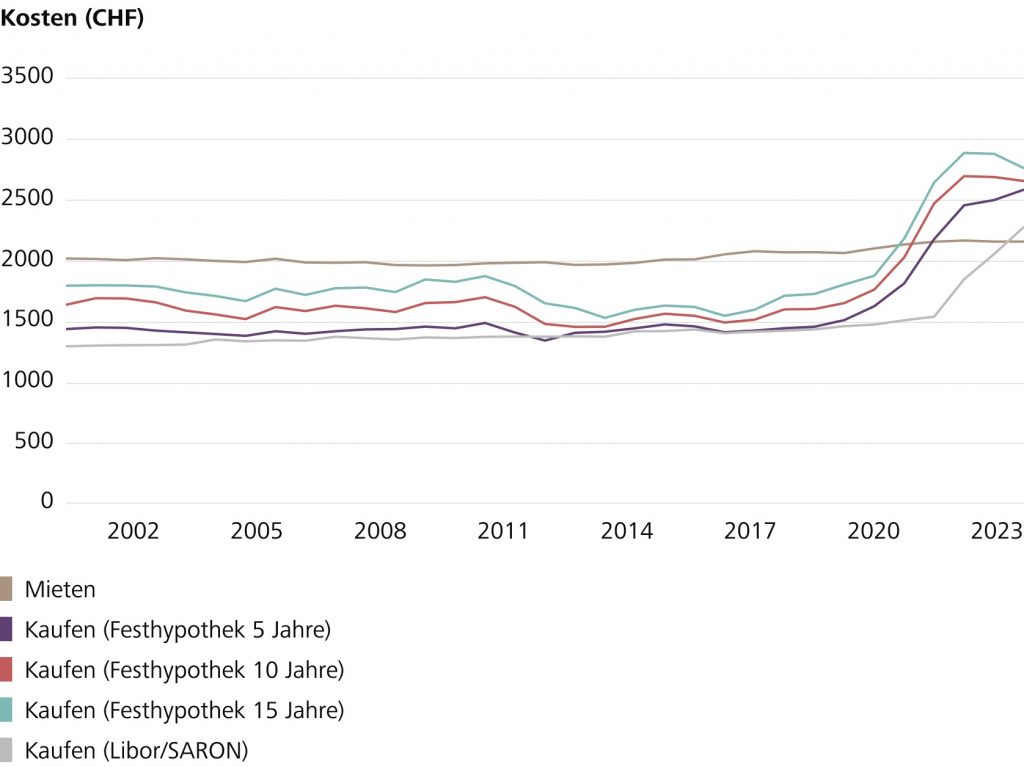
  • Long-term Cost Comparison: The decision between renting and buying requires a thorough financial analysis. In the long run, the total costs of renting and buying can vary greatly. While rental expenses often remain constant, the initial costs of buying are high, and the monthly costs can vary depending on the chosen mortgage model and interest rate level. „It was important for us to compare the long-term costs and see that the monthly burden through the mortgage was significantly lower than our previous rent,“ says Stefan.
  • Equity Requirements and Financing Options: Buying a property typically requires at least 20% of the purchase price as equity. Additional costs such as notary fees and real estate agent commissions also apply. There are various mortgage models that offer different advantages and disadvantages. „We reviewed various financing options and ultimately chose a fixed-rate mortgage to benefit from the low interest rates,“ Stefan further reports.
  • Tax Considerations: Owners can deduct mortgage interest and value-preserving investments from their taxes. This can be particularly advantageous with high mortgage amounts and regular maintenance costs. „The ability to deduct mortgage interest for tax purposes strongly influenced our decision to buy a house,“ explains Andreas.
Source: Raiffeisen

Excursus: Imputed Rental

Value The imputed rental value is a tax term in Switzerland that refers to the theoretical rental value of a property used by its owner. This amount is added to the owner’s income and taxed. The underlying idea is that owner-occupied housing provides an economic benefit that the state wants to tax. The imputed rental value is determined by tax authorities and can vary depending on the canton and location of the property. There are discussions about abolishing the imputed rental value, but it currently remains a component of the Swiss tax system.

Lifestyle and Personal Considerations

  • Life Planning: The decision whether to rent or buy heavily depends on individual life plans. Starting a family, career changes, or the desire for long-term stability can influence this decision. Owning a home provides a stable base for families, while renting offers more flexibility.
  • Professional Flexibility: Those who want to remain professionally flexible might find renting a better option. A rented space allows for quicker responses to career changes and the ability to change residence as needed.
  • Personal Preferences: Your personal preferences also play a role. Do you enjoy living in an urban environment with many amenities, or do you prefer the tranquility of rural life? These preferences influence both the choice of living location and the decision between renting and buying.

Conclusion

In summary, both renting and buying a property have their own advantages and disadvantages. The decision strongly depends on individual life circumstances, financial capabilities, and personal preferences. A thorough analysis of the long-term costs and careful planning are crucial to making the best choice.

Advice and Support

If you need professional assistance to make an informed decision, our advisors from the Swiss Property Owners Association are at your service:

  • Sales: Professional evaluation and marketing
  • Support in finding the right property
  • Assistance with financial planning and selecting the appropriate mortgage model
  • Advice on legal aspects of rental or purchase agreements

These services aim to guide you through the complexities of the real estate market, ensuring you have the information and support needed to make decisions that align with your personal and financial goals. Whether you’re considering renting or buying, understanding the financial implications, legal obligations, and market conditions can be crucial for a successful outcome.

R

Personal Stories: Why We Chose to Rent or Buy?

To gain a better understanding of individual decisions, we interviewed some of our association members. These personal stories offer valuable insights into the various considerations and experiences with renting and buying a property.

Renting: The Flexible Option for the Professionally Unbound

Anna, 28, works in the IT industry and loves being flexible in her career and geographically. „I chose to rent because I want to advance my career, which may require me to change my place of residence or even move abroad. The flexibility that renting offers is invaluable to me,“ she explains. Anna also appreciates the lower financial commitments and the freedom of not having to worry about maintenance.

Buying: An Investment in the Future

Peter and Julia, both in their mid-30s, bought a single-family home near Bern three years ago. „For us, it was important to have a home for our growing family and at the same time invest in our future,“ says Peter. They value the stability and security that owning a home brings. „We can design our home to our liking and know that we are building wealth in the long term,“ adds Julia.

These personal anecdotes demonstrate how motives for renting or buying can vary greatly. While flexibility and lower responsibility are attractive to renters, buying property offers long-term stability and the opportunity for asset accumulation

Renting: A Flexible Option

Renting a property offers numerous benefits, especially for those who value flexibility and prefer lower financial commitments. Renters can more easily and usually more quickly change their place of residence, which is particularly advantageous in professional uncertainty or early life stages. „For me, it was important to stay flexible to seize career opportunities, and I also love getting to know new cities – usually, I get bored after a few years,“ explains Rolf, a 35-year-old marketing expert.

Rental payments are often more stable and lower than mortgage payments, especially with rising interest rates. This allows renters to better plan their monthly expenses and avoid financial overreach. „The monthly rent gives me the security of having my expenses and budget under control without unexpected additional costs,“ says Rolf, for whom owning a property is not among his life goals.

Another advantage is that renters do not have to worry about maintenance and repairs. These tasks are the landlord’s responsibility, saving time and money. „As a renter, I don’t have to worry about repairing the roof or replacing the heating system. This removes a lot of stress and financial burden from my shoulders,“ explains Markus from Baden.

The Hidden Costs of Renting

Although renting offers many advantages, there are also some hidden costs and disadvantages that must be considered.

Renting does not lead to asset accumulation since rental payments do not contribute to building equity. „I am aware that I am not building wealth in the long term by renting, and my money is essentially going into ’someone else’s pocket‘ – that does hurt a bit,“ says Melanie, a 32-year-old PR consultant.

Rental prices can increase over time, which can become expensive in the long term. In some urban areas, rental prices have risen sharply due to housing shortages and continued high demand, leading to significant financial strain. „When my landlord suddenly raised the rent last year, it became difficult for me to cover my monthly expenses, especially as everything else becomes more expensive,“ reports Jonas, a 45-year-old sales manager from Zurich.

Renters often have less freedom to design their living space. Major renovations or modifications are usually not allowed or must be approved by the landlord. „I would like to modernize my kitchen, but as a renter, I am greatly restricted in making major changes,“ explains Jonas with a hint of frustration in his voice.

Excursus: Mortgage Reference Interest Rate and Its Impact on Rents in Switzerland

The mortgage reference interest rate is determined by the Federal Office for Housing (BWO) in collaboration with the Swiss National Bank (SNB). This interest rate serves as a basis for calculating rents in Switzerland. It is published quarterly and is based on the average interest rate of outstanding mortgages.

If the reference interest rate rises, landlords are allowed to increase rents to offset the increased financing costs. If the interest rate falls, landlords are required to lower the rents if tenants demand it. These adjustments mean that rental costs in Switzerland are closely linked to interest rate developments.

Buying: Investing in the Future

Buying a property offers numerous advantages, particularly in terms of asset accumulation and long-term stability. Ownership is a long-term investment that contributes to wealth building. „For us, it was important to create a home for our family while simultaneously investing in our future,“ explains Thomas, a 38-year-old engineer.

Owners have more control over their living situation and are not threatened by evictions by the landlord, such as when they register a need for personal use. This offers increased stability and security. „We feel safer because we are not affected by sudden evictions,“ adds Thomas.

Another advantage of buying is the freedom to design. Owners can customize their property to suit their individual needs. „It’s great that we can renovate our home as we wish without having to ask anyone for permission. I want to be able to express myself a bit in my home,“ explains Andreas, a 45-year-old doctor with a strong interest in architecture.

Additionally, mortgage interest and maintenance costs offer tax advantages that can reduce the financial burden. „The ability to deduct mortgage interest and other tax benefits has helped me and my wife financially a lot – it was one of the decisive points why we wanted to buy something ourselves,“ says Andreas.

Looking for a New Home?

Explore our latest listings of houses, apartments, and land in Switzerland.

The Challenges of Ownership

Buying a property not only offers advantages but also brings challenges and obligations.

A major disadvantage is the high costs; in recent years, real estate prices, driven by low interest rates, have risen sharply. Buying requires a significant initial investment; in addition to the equity that must be raised, there are also purchase-related costs (land registry, notary fees, real estate agent commissions, etc.). „The initial investment was a big financial challenge for us, but fortunately, we were able to count on the support of our parents,“ recounts Fabian, who, with his wife Monika, fulfilled their dream of owning a house with a view of Lake Thun.

Another disadvantage is the reduced flexibility. Buying a property financially binds and makes it more difficult to change residence quickly. „We found that it’s not so easy to sell our house quickly and move when professional changes are imminent,“ reports Claudia, a 39-year-old lawyer.

Owners must also take care of maintenance and repairs, which means additional costs and effort. „The responsibility for maintenance lies entirely with us, which can be both time-consuming and expensive. I honestly underestimated this a bit,“ adds Claudia.

Financial Considerations and Planning

  • Long-term Cost Comparison: The decision between renting and buying requires a thorough financial analysis. In the long run, the total costs of renting and buying can vary greatly. While rental expenses often remain constant, the initial costs of buying are high, and the monthly costs can vary depending on the chosen mortgage model and interest rate level. „It was important for us to compare the long-term costs and see that the monthly burden through the mortgage was significantly lower than our previous rent,“ says Stefan.
  • Equity Requirements and Financing Options: Buying a property typically requires at least 20% of the purchase price as equity. Additional costs such as notary fees and real estate agent commissions also apply. There are various mortgage models that offer different advantages and disadvantages. „We reviewed various financing options and ultimately chose a fixed-rate mortgage to benefit from the low interest rates,“ Stefan further reports.
  • Tax Considerations: Owners can deduct mortgage interest and value-preserving investments from their taxes. This can be particularly advantageous with high mortgage amounts and regular maintenance costs. „The ability to deduct mortgage interest for tax purposes strongly influenced our decision to buy a house,“ explains Andreas.
Source: Raiffeisen

Excursus: Imputed Rental

Value The imputed rental value is a tax term in Switzerland that refers to the theoretical rental value of a property used by its owner. This amount is added to the owner’s income and taxed. The underlying idea is that owner-occupied housing provides an economic benefit that the state wants to tax. The imputed rental value is determined by tax authorities and can vary depending on the canton and location of the property. There are discussions about abolishing the imputed rental value, but it currently remains a component of the Swiss tax system.

Lifestyle and Personal Considerations

  • Life Planning: The decision whether to rent or buy heavily depends on individual life plans. Starting a family, career changes, or the desire for long-term stability can influence this decision. Owning a home provides a stable base for families, while renting offers more flexibility.
  • Professional Flexibility: Those who want to remain professionally flexible might find renting a better option. A rented space allows for quicker responses to career changes and the ability to change residence as needed.
  • Personal Preferences: Your personal preferences also play a role. Do you enjoy living in an urban environment with many amenities, or do you prefer the tranquility of rural life? These preferences influence both the choice of living location and the decision between renting and buying.

Conclusion

In summary, both renting and buying a property have their own advantages and disadvantages. The decision strongly depends on individual life circumstances, financial capabilities, and personal preferences. A thorough analysis of the long-term costs and careful planning are crucial to making the best choice.

Advice and Support

If you need professional assistance to make an informed decision, our advisors from the Swiss Property Owners Association are at your service:

  • Sales: Professional evaluation and marketing
  • Support in finding the right property
  • Assistance with financial planning and selecting the appropriate mortgage model
  • Advice on legal aspects of rental or purchase agreements

These services aim to guide you through the complexities of the real estate market, ensuring you have the information and support needed to make decisions that align with your personal and financial goals. Whether you’re considering renting or buying, understanding the financial implications, legal obligations, and market conditions can be crucial for a successful outcome.

R

What is Home Staging?

Home staging—unfortunately, there is no equivalent term in German—refers to all measures taken to enhance the interior and exterior spaces of a property for sale. A professional home staging company creates a coordinated concept of furniture, accessories, colors, and lighting, and provides recommendations for any minor renovation work that may be necessary, such as repairs and painting.

The objective of home staging is to present a property for sale in the most favorable light possible, thereby achieving a shorter marketing period and a higher selling price. In most cases, the additional revenue significantly exceeds the costs of home staging.

Where Did Home Staging Originate?

Home staging originated in the United States in the 1970s and has long been established in many English-speaking countries for marketing properties.

With a few decades of delay and still very tentatively, home staging has increasingly been used in Switzerland in recent years. The Swiss Property Owners Association sees itself in a pioneering role here and implements home staging whenever possible and sensible in property marketing. Many real estate agents and private property sellers shy away from the high initial costs of this marketing measure and fail to see that the expenditures for intelligently applied home staging more than pay off in most cases through shorter marketing times and higher sale prices.

Regarding costs: All members of the Swiss Property Owners Association benefit from significantly reduced costs or even complete cost coverage for home staging within a sales mandate.

How Exactly Does Home Staging Work?

Home staging makes a property attractive to potential buyers through targeted decoration and furnishing, often creating a positive first impression during viewings. By designing the rooms appealingly and professionally, emotions are evoked, and prospective homeowners can better visualize the room proportions. Ideally, a sense of comfort is established right from the start, making prospects fall in love with their new home and converting them into buyers.

Professionals typically proceed as follows:

  • Inspection and Consultation: Home stagers often first want to assess the condition of the property on-site. This allows them to gauge how extensive the marketing measures should be and discuss this with the sellers.
  • Preliminary Work: Once an appropriate home staging solution has been agreed upon, the next step is to declutter the house, depersonalize it, eliminate any disorder, and touch up minor wear and tear. If necessary, walls may be repainted or preliminary work done in the garden or exterior areas.
  • Conceptualization: Next, home stagers design a coherent furnishing, space, color, and lighting concept tailored to the characteristics of the property and enhancing its value. Special attention is given to the selection of furniture—it should ideally be high-quality and neutral. From our experience, furniture from the agency’s own inventory is preferable to cheap alternatives like cardboard furniture (cheap usually looks cheap).
  • Implementation: In the final step, the apartment or house is staged; furniture is delivered and the property decorated.

The scope of home staging measures naturally depends on the available budget. It is advisable to apply a consistent staging concept and stage all rooms. Staging only individual rooms and presenting them in the best possible light can be counterproductive, as it may accentuate the contrast to the vacant or unstaged rooms.

Why Does Home Staging Work So Well?

Home staging is essentially applied psychology and takes advantage of the following common behaviors of potential buyers:

  • First Impression: People quickly form an opinion about a property based on their first impression. Home staging aims to create a positive first impression by making the property attractive and inviting.
  • Emotional Connection: Home staging attempts to establish an emotional connection between potential buyers and the property. Through skillful staging, positive emotions such as joy, security, and satisfaction are evoked—creating a feel-good effect. This can lead potential buyers to develop a connection with the property and envision themselves living there.
  • Neutrality and Depersonalization: It is often recommended to remove personal items and individual decorations during home staging to appeal to a broader audience. This allows prospects to better imagine how they might design and use the space themselves.
  • Perception of Space: The way rooms are arranged can influence perceptions of size, function, and usability. Home staging professionals use psychological principles to make spaces appear larger, brighter, and more open. Through strategic placement of furniture, use of light and colors, and organization of space, optimal room perception is created.
  • Trust Building: Home staging can also help build trust with potential buyers. By professionally presenting the property, the impression is conveyed that the house is well-maintained and in good condition. This can eliminate initial uncertainties and doubts, encouraging potential buyers to show further interest.

Another psychological advantage: A furnished apartment or staged house looks move-in ready, and potential buyers do not immediately see the considerable effort that comes after the purchase. This effect is confirmed by various studies and surveys from the USA.

Important: Home staging is not intended to disadvantage buyers. On the contrary, home staging reveals potential that buyers might not recognize without it—thus they might not purchase their dream property.

What Types of Home Staging Are There?

Depending on the situation and budget, there are many different ways to stage a property. We have navigated through the terminology jungle and tried to create an overview:

Full Home Staging: An empty property is fully staged, meaning it is furnished and decorated. Depending on the provider, you can also choose a suitable lighting or scent concept to maximize the property’s potential.

Partial Home Staging: Either specific rooms of an apartment or house are targeted for staging to put them in the best possible light, or the home staging includes only certain components (furnishing, decoration, repairing wear and tear, etc.).

Complementary Home Staging: If a property is still partially furnished, home staging can enhance its appearance and create a professional impression. By strategically placing certain pieces of furniture, the property’s value is enhanced.

Home Staging Light: Here, the credo „use what you have“ applies—a professional helps to depersonalize the rooms to achieve the desired „hotel effect.“

Virtual Home Staging: This is the most cost-effective option—furnishings are placed in a photo to help one imagine how the empty space could be furnished. However, experience shows that virtual home staging cannot replace an on-site visit. Ultimately, emotions play a decisive role in buying a home; one needs to feel at home on-site, not just in front of a screen.

What Makes Good Home Staging?

In home staging, there are several key points to consider:

Neutrality: Use neutral colors and decorations to appeal to the tastes of a broad audience. A well-thought-out style concept is also relevant.

Decluttering/Depersonalization: For properties that are still inhabited, remove personal items and unnecessary furniture to convey a clean and spacious impression.

Lighting: A well-considered lighting concept that mixes natural and artificial light to make the space bright and inviting.

Highlighting Features: Consciously emphasize the best features of the house or apartment, such as architectural details or special amenities.

Attention to Small Details: Fresh flowers and stylish accessories help to enhance the overall impression.

Outdoor Area: A welcoming entrance and a well-maintained garden or terrace create an inviting atmosphere.

It’s important to create a homely ambiance in which a wide range of people can feel comfortable. Through professional color selection and the right choice of furniture, accessories, and art objects, a thoughtful design concept is created. This should make it as easy as possible for prospects to imagine their future in the property. A study by the National Association of REALTORS (NAR) found that 77% of buyers surveyed could better imagine a professionally furnished home as their future residence compared to an empty property.

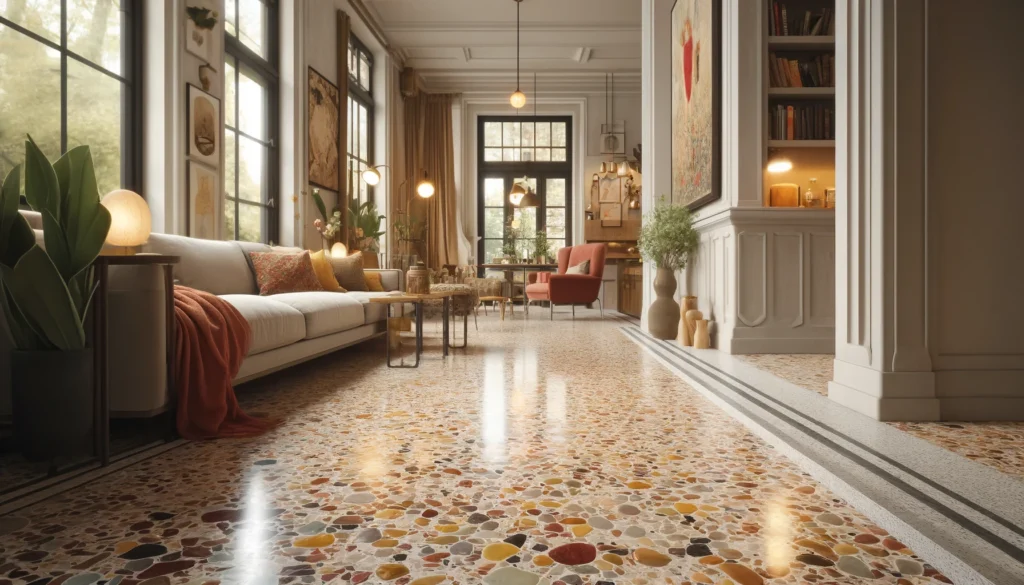
Home Staging in Action: Through targeted room design, this interior is brought to life and reveals the true potential of the space.

Advantages and Disadvantages of Home Staging

Advantages:

  • Shorter Marketing Time: Leads to lower marketing costs (e.g., advertising expenses) and holding costs for vacancies (e.g., mortgage interest and utilities).
  • Higher Selling Price
  • Competitive Edge: Home staging helps differentiate your property positively from other listings.
  • More Viewings: Potential buyers are more likely to visit staged properties.

Disadvantages:

  • Initial Costs: Good home staging can cost CHF 10,000 or more. However, in most cases, the positive effects of home staging more than offset the costs.

When is Home Staging Worth It?

Home staging is almost always worthwhile in Switzerland—regardless of the type of property or market conditions—and whether the property is vacant or still inhabited. Clearly, home staging is a proven and effective method to enhance the sales value, attract more potential buyers, and speed up the sales process.

Numerous studies and statistics confirm that home staging is successful and the costs of home staging measures are quickly amortized through a higher selling price. In short: it is a worthwhile investment, whether for a simple apartment or a luxurious villa.

Are There Scientific Studies on the Effectiveness of Home Staging?

Especially in the USA, there are various studies and surveys that provide empirical evidence regarding the effectiveness of home staging. For instance, a 2017 study by the National Association of Realtors (NAR) showed that staging an apartment offers a measurable sales advantage, typically achieving a higher selling price. According to the NAR, about one-third of realtors say that staging offers lead to purchase offers that are 1% to 5% higher than similar unstaged properties. Another 21% of realtors noted that the value of a home increased by 6% to 10% due to staging.

According to another study from an American industry association, there is also a demonstrable effect on the duration on the market. Professionally staged properties typically sell faster. According to the NAR, 62% of realtors said that staging positively affects the marketing time of a house. The Real Estate Staging Association (RESA) also found in a 2020 study that „staged“ houses enjoy significantly higher demand, sell faster, and the achieved selling price was between 5% and 23% higher than the originally set selling price in 85% of the cases.

Not only the Anglo-Saxon world is enthusiastic about home staging. In Sweden, several studies have shown that properties can be sold both quicker and for up to 15% higher prices. Interestingly, despite the apparent advantages, home staging is not yet widespread in Switzerland.

How Much Does Professional Home Staging Cost?

The costs for professional home staging depend on various factors such as the living area of the property and the scope of the project. A professionally conducted „Full Home Staging“ can quickly cost more than CHF 10,000. Common but risky are agreements where the initial price includes the first 8 weeks, but each additional week incurs further costs. Depending on the duration of marketing, it can become expensive.

Who Bears the Costs for Home Staging?

Normally, the seller must cover the costs of home staging. Generally, this investment pays off, and the associated costs of home staging measures are quickly amortized through a higher selling price.

At the Swiss Property Owners Association, we are so convinced of the effectiveness of home staging that we pre-finance the costs for our members under a sales mandate and, in some cases, even cover them entirely. Depending on the scope of the required work, we also help with painting or advance smaller renovation works.

Can I Deduct the Costs of Home Staging from Taxes?

Since home staging is still relatively young and not widely spread in Switzerland, there are no uniform guidelines for tax deductibility. The Swiss Property Owners Association maintains that home staging is a marketing measure and therefore can be deducted as selling costs for calculating the property gain tax. Additionally, home staging increases the selling price and thus the property gain tax—it would only be logical if the measures that led to a higher property gain tax could be deducted as an expense.

Can I Do Home Staging Myself or Should I Hire a Professional?

Showcasing a property in the best light requires time, experience, and especially expertise. A professional home stager knows exactly how to stage the specific features of a single-family home or the characteristic architecture of a city apartment to fully capitalize on the property’s potential. There are even courses taught on setting the right accents and highlighting relevant features to attract potential buyers.

If one is not deterred by the effort, a „Do-It-Yourself“ approach is certainly feasible. Often, however, the necessary furniture pieces and decorative items are lacking; fundamentally, the business model of home stagers is based on renting furniture pieces. Adventurous DIY attempts at home staging should thus be well-considered. Even if one has a trained eye and a flair for tasteful decoration, an objective professional’s perspective helps streamline the sales process, avoid pitfalls, and achieve the best possible selling price on the market.

Home Staging by the Swiss Property Owners Association

For our association members, we offer home staging services in collaboration with our partner company tRaumplaner, either free of charge or at a significantly reduced rate within the framework of a sales mandate. We are happy to help you maximize the potential and sale price of your property.

Home Staging from A to Z

A – Aesthetics Aesthetics are central to home staging. The goal is to design the property in a way that appeals to potential buyers and increases its value.

B – Budget The budget for home staging can vary. In Switzerland, it can range from a few hundred to several thousand francs, depending on the size of the property and the desired service level.

C – Character The character of the property should not be lost during staging but ideally highlighted to build an emotional connection with potential buyers.

D – Decoration Decorative elements such as pictures, plants, and cushions are used to make rooms more inviting and appealing.

E – Decluttering Before staging begins, it is often necessary to declutter the property and remove personal items.

F – Photography High-quality photographs are important to present the staged home in the best light, especially for online listings.

G – Floor Plan A clear, logical floor plan helps potential buyers navigate the property and make optimal use of the space.

H – Home Staging Agencies In Switzerland, there are specialized agencies that can handle the entire home staging process.

I – Investment Home staging is an investment that often pays off through a faster sale and a higher selling price.

J – Young and Old Home staging should appeal to a variety of target groups, both young and older buyers.

K – Kitchen The kitchen is a key focus in home staging, as it is often considered the „heart of the home.“

L – Lighting Good lighting can significantly influence the mood of a property and make it more inviting.

M – Furniture Furniture should be well-proportioned and ensure that the room neither feels overcrowded nor too empty.

N – Sustainability There is a trend toward using sustainable materials and furniture, which is often well received in environmentally conscious Switzerland.

O – Online Presence A strong online presence with photos and descriptions of the staged home is crucial for sales success.

P – Professionalism Professionalism in execution and customer relations is essential for successful home staging.

Q – Quality The quality of home staging can be decisive for the first impression a potential buyer gets of the property.

R – Room Layout The room layout should be logical and meet the needs of the target audience.

S – Style The style of home staging should match the property but also be flexible enough to appeal to a broad audience.

T – Trends Interior design trends can be considered, but they should not overshadow the timeless elements of the home.

U – Moving Home staging is often done before moving out to make the property ready for sale.

V – Sale Price Professional home staging can often lead to a higher sale price.

W – Living Room The living room is often the focal point of a property and should be particularly well-designed.

X – X-Factor The so-called X-Factor is the special something that distinguishes a property and sets it apart from others.

Y – Yard (Garden) In Switzerland, the outdoor area is often as important as the indoor area. A well-maintained garden can increase the value of a property.

Z – Time Professional home staging can accelerate the sales process by presenting the property as more attractive and ready for sale.

R

What is Home Staging?

Home staging—unfortunately, there is no equivalent term in German—refers to all measures taken to enhance the interior and exterior spaces of a property for sale. A professional home staging company creates a coordinated concept of furniture, accessories, colors, and lighting, and provides recommendations for any minor renovation work that may be necessary, such as repairs and painting.

The objective of home staging is to present a property for sale in the most favorable light possible, thereby achieving a shorter marketing period and a higher selling price. In most cases, the additional revenue significantly exceeds the costs of home staging.

Where Did Home Staging Originate?

Home staging originated in the United States in the 1970s and has long been established in many English-speaking countries for marketing properties.

With a few decades of delay and still very tentatively, home staging has increasingly been used in Switzerland in recent years. The Swiss Property Owners Association sees itself in a pioneering role here and implements home staging whenever possible and sensible in property marketing. Many real estate agents and private property sellers shy away from the high initial costs of this marketing measure and fail to see that the expenditures for intelligently applied home staging more than pay off in most cases through shorter marketing times and higher sale prices.

Regarding costs: All members of the Swiss Property Owners Association benefit from significantly reduced costs or even complete cost coverage for home staging within a sales mandate.

How Exactly Does Home Staging Work?

Home staging makes a property attractive to potential buyers through targeted decoration and furnishing, often creating a positive first impression during viewings. By designing the rooms appealingly and professionally, emotions are evoked, and prospective homeowners can better visualize the room proportions. Ideally, a sense of comfort is established right from the start, making prospects fall in love with their new home and converting them into buyers.

Professionals typically proceed as follows:

  • Inspection and Consultation: Home stagers often first want to assess the condition of the property on-site. This allows them to gauge how extensive the marketing measures should be and discuss this with the sellers.
  • Preliminary Work: Once an appropriate home staging solution has been agreed upon, the next step is to declutter the house, depersonalize it, eliminate any disorder, and touch up minor wear and tear. If necessary, walls may be repainted or preliminary work done in the garden or exterior areas.
  • Conceptualization: Next, home stagers design a coherent furnishing, space, color, and lighting concept tailored to the characteristics of the property and enhancing its value. Special attention is given to the selection of furniture—it should ideally be high-quality and neutral. From our experience, furniture from the agency’s own inventory is preferable to cheap alternatives like cardboard furniture (cheap usually looks cheap).
  • Implementation: In the final step, the apartment or house is staged; furniture is delivered and the property decorated.

The scope of home staging measures naturally depends on the available budget. It is advisable to apply a consistent staging concept and stage all rooms. Staging only individual rooms and presenting them in the best possible light can be counterproductive, as it may accentuate the contrast to the vacant or unstaged rooms.

Why Does Home Staging Work So Well?

Home staging is essentially applied psychology and takes advantage of the following common behaviors of potential buyers:

  • First Impression: People quickly form an opinion about a property based on their first impression. Home staging aims to create a positive first impression by making the property attractive and inviting.
  • Emotional Connection: Home staging attempts to establish an emotional connection between potential buyers and the property. Through skillful staging, positive emotions such as joy, security, and satisfaction are evoked—creating a feel-good effect. This can lead potential buyers to develop a connection with the property and envision themselves living there.
  • Neutrality and Depersonalization: It is often recommended to remove personal items and individual decorations during home staging to appeal to a broader audience. This allows prospects to better imagine how they might design and use the space themselves.
  • Perception of Space: The way rooms are arranged can influence perceptions of size, function, and usability. Home staging professionals use psychological principles to make spaces appear larger, brighter, and more open. Through strategic placement of furniture, use of light and colors, and organization of space, optimal room perception is created.
  • Trust Building: Home staging can also help build trust with potential buyers. By professionally presenting the property, the impression is conveyed that the house is well-maintained and in good condition. This can eliminate initial uncertainties and doubts, encouraging potential buyers to show further interest.

Another psychological advantage: A furnished apartment or staged house looks move-in ready, and potential buyers do not immediately see the considerable effort that comes after the purchase. This effect is confirmed by various studies and surveys from the USA.

Important: Home staging is not intended to disadvantage buyers. On the contrary, home staging reveals potential that buyers might not recognize without it—thus they might not purchase their dream property.

What Types of Home Staging Are There?

Depending on the situation and budget, there are many different ways to stage a property. We have navigated through the terminology jungle and tried to create an overview:

Full Home Staging: An empty property is fully staged, meaning it is furnished and decorated. Depending on the provider, you can also choose a suitable lighting or scent concept to maximize the property’s potential.

Partial Home Staging: Either specific rooms of an apartment or house are targeted for staging to put them in the best possible light, or the home staging includes only certain components (furnishing, decoration, repairing wear and tear, etc.).

Complementary Home Staging: If a property is still partially furnished, home staging can enhance its appearance and create a professional impression. By strategically placing certain pieces of furniture, the property’s value is enhanced.

Home Staging Light: Here, the credo „use what you have“ applies—a professional helps to depersonalize the rooms to achieve the desired „hotel effect.“

Virtual Home Staging: This is the most cost-effective option—furnishings are placed in a photo to help one imagine how the empty space could be furnished. However, experience shows that virtual home staging cannot replace an on-site visit. Ultimately, emotions play a decisive role in buying a home; one needs to feel at home on-site, not just in front of a screen.

What Makes Good Home Staging?

In home staging, there are several key points to consider:

Neutrality: Use neutral colors and decorations to appeal to the tastes of a broad audience. A well-thought-out style concept is also relevant.

Decluttering/Depersonalization: For properties that are still inhabited, remove personal items and unnecessary furniture to convey a clean and spacious impression.

Lighting: A well-considered lighting concept that mixes natural and artificial light to make the space bright and inviting.

Highlighting Features: Consciously emphasize the best features of the house or apartment, such as architectural details or special amenities.

Attention to Small Details: Fresh flowers and stylish accessories help to enhance the overall impression.

Outdoor Area: A welcoming entrance and a well-maintained garden or terrace create an inviting atmosphere.

It’s important to create a homely ambiance in which a wide range of people can feel comfortable. Through professional color selection and the right choice of furniture, accessories, and art objects, a thoughtful design concept is created. This should make it as easy as possible for prospects to imagine their future in the property. A study by the National Association of REALTORS (NAR) found that 77% of buyers surveyed could better imagine a professionally furnished home as their future residence compared to an empty property.

Home Staging in Action: Through targeted room design, this interior is brought to life and reveals the true potential of the space.

Advantages and Disadvantages of Home Staging

Advantages:

  • Shorter Marketing Time: Leads to lower marketing costs (e.g., advertising expenses) and holding costs for vacancies (e.g., mortgage interest and utilities).
  • Higher Selling Price
  • Competitive Edge: Home staging helps differentiate your property positively from other listings.
  • More Viewings: Potential buyers are more likely to visit staged properties.

Disadvantages:

  • Initial Costs: Good home staging can cost CHF 10,000 or more. However, in most cases, the positive effects of home staging more than offset the costs.

When is Home Staging Worth It?

Home staging is almost always worthwhile in Switzerland—regardless of the type of property or market conditions—and whether the property is vacant or still inhabited. Clearly, home staging is a proven and effective method to enhance the sales value, attract more potential buyers, and speed up the sales process.

Numerous studies and statistics confirm that home staging is successful and the costs of home staging measures are quickly amortized through a higher selling price. In short: it is a worthwhile investment, whether for a simple apartment or a luxurious villa.

Are There Scientific Studies on the Effectiveness of Home Staging?

Especially in the USA, there are various studies and surveys that provide empirical evidence regarding the effectiveness of home staging. For instance, a 2017 study by the National Association of Realtors (NAR) showed that staging an apartment offers a measurable sales advantage, typically achieving a higher selling price. According to the NAR, about one-third of realtors say that staging offers lead to purchase offers that are 1% to 5% higher than similar unstaged properties. Another 21% of realtors noted that the value of a home increased by 6% to 10% due to staging.

According to another study from an American industry association, there is also a demonstrable effect on the duration on the market. Professionally staged properties typically sell faster. According to the NAR, 62% of realtors said that staging positively affects the marketing time of a house. The Real Estate Staging Association (RESA) also found in a 2020 study that „staged“ houses enjoy significantly higher demand, sell faster, and the achieved selling price was between 5% and 23% higher than the originally set selling price in 85% of the cases.

Not only the Anglo-Saxon world is enthusiastic about home staging. In Sweden, several studies have shown that properties can be sold both quicker and for up to 15% higher prices. Interestingly, despite the apparent advantages, home staging is not yet widespread in Switzerland.

How Much Does Professional Home Staging Cost?

The costs for professional home staging depend on various factors such as the living area of the property and the scope of the project. A professionally conducted „Full Home Staging“ can quickly cost more than CHF 10,000. Common but risky are agreements where the initial price includes the first 8 weeks, but each additional week incurs further costs. Depending on the duration of marketing, it can become expensive.

Who Bears the Costs for Home Staging?

Normally, the seller must cover the costs of home staging. Generally, this investment pays off, and the associated costs of home staging measures are quickly amortized through a higher selling price.

At the Swiss Property Owners Association, we are so convinced of the effectiveness of home staging that we pre-finance the costs for our members under a sales mandate and, in some cases, even cover them entirely. Depending on the scope of the required work, we also help with painting or advance smaller renovation works.

Can I Deduct the Costs of Home Staging from Taxes?

Since home staging is still relatively young and not widely spread in Switzerland, there are no uniform guidelines for tax deductibility. The Swiss Property Owners Association maintains that home staging is a marketing measure and therefore can be deducted as selling costs for calculating the property gain tax. Additionally, home staging increases the selling price and thus the property gain tax—it would only be logical if the measures that led to a higher property gain tax could be deducted as an expense.

Can I Do Home Staging Myself or Should I Hire a Professional?

Showcasing a property in the best light requires time, experience, and especially expertise. A professional home stager knows exactly how to stage the specific features of a single-family home or the characteristic architecture of a city apartment to fully capitalize on the property’s potential. There are even courses taught on setting the right accents and highlighting relevant features to attract potential buyers.

If one is not deterred by the effort, a „Do-It-Yourself“ approach is certainly feasible. Often, however, the necessary furniture pieces and decorative items are lacking; fundamentally, the business model of home stagers is based on renting furniture pieces. Adventurous DIY attempts at home staging should thus be well-considered. Even if one has a trained eye and a flair for tasteful decoration, an objective professional’s perspective helps streamline the sales process, avoid pitfalls, and achieve the best possible selling price on the market.

Home Staging by the Swiss Property Owners Association

For our association members, we offer home staging services in collaboration with our partner company tRaumplaner, either free of charge or at a significantly reduced rate within the framework of a sales mandate. We are happy to help you maximize the potential and sale price of your property.

Home Staging from A to Z

A – Aesthetics Aesthetics are central to home staging. The goal is to design the property in a way that appeals to potential buyers and increases its value.

B – Budget The budget for home staging can vary. In Switzerland, it can range from a few hundred to several thousand francs, depending on the size of the property and the desired service level.

C – Character The character of the property should not be lost during staging but ideally highlighted to build an emotional connection with potential buyers.

D – Decoration Decorative elements such as pictures, plants, and cushions are used to make rooms more inviting and appealing.

E – Decluttering Before staging begins, it is often necessary to declutter the property and remove personal items.

F – Photography High-quality photographs are important to present the staged home in the best light, especially for online listings.

G – Floor Plan A clear, logical floor plan helps potential buyers navigate the property and make optimal use of the space.

H – Home Staging Agencies In Switzerland, there are specialized agencies that can handle the entire home staging process.

I – Investment Home staging is an investment that often pays off through a faster sale and a higher selling price.

J – Young and Old Home staging should appeal to a variety of target groups, both young and older buyers.

K – Kitchen The kitchen is a key focus in home staging, as it is often considered the „heart of the home.“

L – Lighting Good lighting can significantly influence the mood of a property and make it more inviting.

M – Furniture Furniture should be well-proportioned and ensure that the room neither feels overcrowded nor too empty.

N – Sustainability There is a trend toward using sustainable materials and furniture, which is often well received in environmentally conscious Switzerland.

O – Online Presence A strong online presence with photos and descriptions of the staged home is crucial for sales success.

P – Professionalism Professionalism in execution and customer relations is essential for successful home staging.

Q – Quality The quality of home staging can be decisive for the first impression a potential buyer gets of the property.

R – Room Layout The room layout should be logical and meet the needs of the target audience.

S – Style The style of home staging should match the property but also be flexible enough to appeal to a broad audience.

T – Trends Interior design trends can be considered, but they should not overshadow the timeless elements of the home.

U – Moving Home staging is often done before moving out to make the property ready for sale.

V – Sale Price Professional home staging can often lead to a higher sale price.

W – Living Room The living room is often the focal point of a property and should be particularly well-designed.

X – X-Factor The so-called X-Factor is the special something that distinguishes a property and sets it apart from others.

Y – Yard (Garden) In Switzerland, the outdoor area is often as important as the indoor area. A well-maintained garden can increase the value of a property.

Z – Time Professional home staging can accelerate the sales process by presenting the property as more attractive and ready for sale.

T

In an era where sustainable construction and unique design solutions are becoming increasingly important, terrazzo flooring offers numerous benefits. From residential homes to luxurious apartments, public buildings, and commercial spaces, the applications are nearly limitless. This article highlights the reasons for the resurgence of terrazzo flooring, explores modern uses, and explains why this classic flooring fits perfectly into today’s construction world.

History and Origin of Terrazzo Flooring

The history of terrazzo flooring stretches far back to antiquity. The Romans first discovered the benefits of this robust and aesthetically pleasing floor covering. Originally, it was a cost-effective solution for reusing marble and stone scraps, mixed with lime mortar and processed into a solid, polishable surface. This technique quickly spread throughout the Roman Empire and was primarily used in public buildings, baths, and villas.

After the fall of the Roman Empire, the technique of terrazzo flooring initially fell into oblivion. It was not until the Renaissance that it truly flourished, especially in Venice. Venetian artisans refined the method and created intricate patterns and designs that adorned the palaces and churches of the city. Terrazzo floors became a symbol of luxury and craftsmanship that has been preserved over the centuries.

In the 20th century, terrazzo flooring was primarily used in public buildings and residential homes. With industrialization came new materials and techniques that eased production and opened up more diverse design possibilities. During the Art Deco movement of the 1920s and 1930s, terrazzo flooring saw another peak as the geometric patterns and color diversity of this era matched perfectly with the aesthetics of terrazzo.

In recent decades, terrazzo flooring has gained popularity once again. Modern architects and designers value the combination of aesthetics, durability, and sustainability that this flooring offers. At the same time, advancements in manufacturing techniques allow for even more precise and creative designs, making terrazzo floors today a choice for a variety of projects, from luxurious private homes to prestigious commercial spaces.

How and From What is Terrazzo Made?

The production of terrazzo flooring has evolved over the centuries but remains at its core a craft process requiring precision and skill. Traditionally, the production starts with a base of concrete or mortar, onto which a layer of stone or marble fragments is applied. These fragments, often available in various colors and sizes, are embedded into the still wet binder and then smoothed out. Once the mixture has dried and hardened, the surface is ground and polished to achieve a glossy, smooth finish.

With advancements in the construction industry and materials science, the techniques for making terrazzo floors have become more modern and efficient. Today, prefabricated terrazzo tiles are often used, manufactured in factories under controlled conditions. These tiles consist of a mix of resins or cement with stone or glass fragments and can be produced in various sizes and shapes. The use of resins allows for thinner and lighter slabs that are easier to transport and install. Prefabricated terrazzo slabs are significantly cheaper to purchase but cannot match the effect of a traditionally laid terrazzo floor.

The materials used in the production of terrazzo floors have changed over time. Originally, mainly marble and limestone fragments were used, but today the possibilities are nearly unlimited. Marble, quartz, granite, and glass are commonly used in various colors and sizes to create interesting visual effects.

In addition to these traditional materials, modern additives are also used to enhance the functionality and aesthetics of terrazzo floors. For example, color pigments can be added to achieve specific shades, or special additives can be used to increase strength and durability. The use of recycled materials, such as glass bottles or industrial waste, contributes to sustainability and makes terrazzo floors an environmentally friendly choice.

From Ancient Ruins to Modern Masterpieces: The Evolution of Terrazzo Flooring

Terrazzo Flooring in Modern Construction

oday, terrazzo flooring is found in a variety of new constructions, from residential homes to commercial buildings. Its versatility and aesthetic appeal make it particularly attractive to architects and interior designers looking for durable and elegant flooring solutions.

Residential Homes and Condominiums: In modern homes and luxury apartments, terrazzo floors are often used in entryways, kitchens, and bathrooms. The smooth, polished surface of terrazzo lends a touch of luxury and elegance to these spaces. Additionally, due to its resistance to moisture and wear, terrazzo flooring is particularly suitable for high-traffic areas.

Commercial Buildings such as Hotels, Restaurants, and Offices: Terrazzo floors are also widespread in commercial buildings. In hotels and restaurants, they create a stylish and welcoming atmosphere. In office buildings, terrazzo floors contribute to a professional and modern aesthetic while offering a durable and easy-to-maintain flooring solution.

Terrazzo floors seamlessly integrate into various modern architectural styles, from minimalist to industrial. Their adaptability allows them to be used in nearly any design concept.

Minimalist Design: In minimalist spaces, terrazzo floors emphasize the clarity and simplicity of the design. With their subtle colors and natural patterns, they harmoniously blend into the minimalist aesthetic while providing an interesting visual accent.

Industrial Design: In industrial design, which is often characterized by rough materials and imperfect surfaces, terrazzo floors offer a fascinating contrast. The smooth, polished surface of terrazzo complements the raw texture of concrete, metal, and wood, creating a balanced and appealing overall appearance.

Color and Spatial Adaptation: Terrazzo floors are available in a variety of colors and patterns, making it possible to tailor them to the specific requirements of a project. From monochrome designs to vibrant, colorful patterns, terrazzo floors can be customized to achieve the desired aesthetic effect.

Expert Advice:
Terrazzo Floors as a Versatile and Durable Solution in Modern Construction

Terrazzo flooring has established itself in modern constructions as a versatile, durable, and aesthetically appealing solution. Its ability to seamlessly integrate into various architectural styles, while offering both functional and decorative benefits, makes it an ideal choice for a wide range of projects. With ongoing innovations in technology and materials, terrazzo floors remain a staple in modern construction.

Terrazzo Flooring in the Renovation of Historic Buildings

Renovating historic buildings: Terrazzo flooring plays a significant role in the renovation and restoration of historic buildings. Due to its durability and aesthetic variety, it is found in many heritage-listed structures.

Preservation and restoration of original floors: In many historic buildings, particularly those from the Renaissance and early 20th century, terrazzo floors are an essential part of the original building fabric. During renovation projects, a major focus is on preserving and restoring these floors. This requires specialized techniques and expertise to maintain the original beauty and integrity of the terrazzo. Restoration work may involve removing stains and cracks, repolishing the surface, and possibly replacing damaged sections.

Adaptation to modern requirements: When renovating historic buildings, there is often a need to adapt the original terrazzo flooring to modern requirements. This may include integrating modern heating systems, such as underfloor heating, or improving sound insulation. Such adaptations must be carefully planned and executed to avoid compromising the historical authenticity of the flooring.

Preservation and Modernization: The Key Role of Terrazzo Flooring in the Renovation of Historic Buildings

Terrazzo Floors in Modern Renovation Projects

Terrazzo flooring is widely used in modern renovation projects as it bridges the gap between tradition and contemporary design.

Renovating Old Buildings with Terrazzo Elements: In the remodeling of old buildings, terrazzo is frequently used to set new, stylish accents. This can include a complete redesign of floor areas or the insertion of terrazzo elements in specific sections. The use of terrazzo gives the rooms a sense of permanence and class while incorporating modern design aspects.

Integration into Contemporary Living and Workspaces: In contemporary living and workspaces, terrazzo provides an ideal solution for floors that need to be both functional and aesthetically pleasing. The ability to customize terrazzo floors allows designers to select unique patterns and colors that perfectly match the desired room concept. Terrazzo floors can be used in kitchens, bathrooms, hallways, and even in open living areas to create a cohesive and harmonious design

Expert Advice:
Terrazzo Floors as a Bridge Between Tradition and Modernity in Construction and Renovation

Terrazzo floors are not only an excellent choice for new constructions but also for renovations and remodeling. Their ability to preserve historical authenticity while meeting modern requirements makes them a preferred option for architects and builders. The combination of durability, ease of maintenance, sustainability, and aesthetic versatility ensures that terrazzo floors will play a significant role in future construction projects.

Cost and Investment Aspects

Terrazzo floors are not cheap. The costs for terrazzo flooring can vary greatly and depend on several factors:

  • Material choice: The choice of materials significantly affects costs. Traditional terrazzo materials like marble and quartz may be more expensive than modern alternatives like recycled glass or epoxy resin. Exotic and high-quality materials also increase costs.
  • Manufacturing and installation type: Traditional handcrafted terrazzo floors are generally more expensive than prefabricated slabs or modular systems. Craftsmanship requires time and skill, which is reflected in the costs. Installing prefabricated slabs, however, is quicker and less expensive.
  • Design complexity: Complex patterns and custom designs increase costs. Simple, single-color terrazzo floors are cheaper than floors with intricate, multi-colored patterns and mosaics. The detail accuracy and precision required for complicated designs also contribute to higher costs.
  • Surface area and project scope: The size of the area to be covered with terrazzo affects the overall costs. Larger projects can benefit from bulk discounts, but the total costs are higher due to the larger amount of material and labor involved. Smaller projects may have relatively higher costs per square meter.
  • Labor costs: Labor costs vary depending on the region and the expertise of the craftsmen involved. In regions with high labor costs or in projects requiring specialized craftsmanship, costs can be significantly higher. In Switzerland, costs are high compared to abroad.

Terrazzo floors represent a long-term investment that is justified by their durability and minimal maintenance costs:

  • Increase in property value: Terrazzo floors can increase the value of properties. Their aesthetic appeal and durability make them a sought-after feature that attracts buyers and increases resale value. Properties with high-quality terrazzo floors can perform better in the market.
  • Low maintenance costs: The ease of maintenance and robustness of terrazzo floors lead to low maintenance costs. Compared to other floor coverings that need to be regularly renewed or intensively maintained, the long-term costs for terrazzo floors are lower.

Cost-benefit analysis compared to other floor coverings: Although the initial costs for terrazzo floors may be higher than for other floor coverings such as laminate or carpet, these costs are amortized over time. The long lifespan and the low need for replacement or extensive repairs make terrazzo floors an economical choice.

Expert Advice:
Terrazzo Floors as a Long-Term Worthwhile Investment Despite Variable Costs

The costs for terrazzo floors can vary significantly due to material choice, manufacturing and installation type, design complexity, and project size. Despite higher initial costs, terrazzo floors represent a worthwhile long-term investment. Their durability, low maintenance costs, and the potential to increase property value make them an attractive option for builders and property owners. With various financing options and tax advantages for remodeling, the initial financial hurdles can be overcome and the benefits of terrazzo floors fully exploited.

Advantages and Disadvantages of Terrazzo Floors

Advantages of Terrazzo Floors

  • Durability and robustness: Terrazzo floors are extremely durable and resistant to wear. They can last for decades, if not centuries, without losing their aesthetic appeal. This makes them a cost-efficient solution in the long run.
  • Ease of maintenance: Terrazzo floors are easy to clean and maintain. Regular sweeping and occasional damp mopping are sufficient to keep the floor in good condition. Since terrazzo floors do not have joints where dirt and dust can accumulate, they are particularly hygienic.
  • Aesthetic versatility: Terrazzo floors offer almost unlimited design possibilities. By selecting different marble, quartz, granite, or glass fragments and color pigments, individual patterns and colors can be created that perfectly match any design concept.
  • Environmental friendliness: Terrazzo floors can be made from recycled materials, making them a sustainable and environmentally friendly choice. The use of recycled glass or stone waste reduces the need for new raw materials and contributes to resource conservation.
  • Heat resistance and fire resistance: Terrazzo floors are heat resistant and non-flammable, making them a safe choice for residential and commercial spaces. They contribute to the fire safety of buildings and can be used in areas with high temperatures without problems.
  • Individuality and exclusivity: Each terrazzo floor is unique. Since the design possibilities are almost unlimited, each floor can be individually customized, giving it an exclusive and personal touch.

Disadvantages of Terrazzo Floors

  • High initial costs: The installation of terrazzo floors can be expensive, especially compared to other floor coverings like laminate or vinyl. The high initial costs are due to the material costs and labor-intensive manufacturing process.
  • Installation effort: The installation of terrazzo floors requires expertise and experience, which increases the cost and time required. Manufacturing and installation can take several days to weeks, depending on the area and design.
  • Cold sensitivity: Terrazzo floors can feel cold, especially in the winter months. Without underfloor heating or carpets, the floor can be uncomfortable for some users, especially in living spaces.
  • Cracking: Despite their durability, terrazzo floors can develop cracks over time, especially if the substrate is not properly prepared or the building settles. These cracks can be repaired, but the repair can be complex and costly.
  • Weight: Terrazzo floors are heavy, which must be considered when planning buildings. In older buildings or in buildings with weaker structures, the additional weight can be problematic.
  • Sensitivity to certain chemicals: Terrazzo floors can be sensitive to certain chemicals contained in cleaning agents. Acidic cleaners can damage the surface and affect the appearance of the floor.

Expert Advice:
The Pros and Cons of Terrazzo Floors in Modern Construction Projects

Terrazzo floors offer a variety of advantages that make them an attractive choice for many construction projects. Their durability, ease of maintenance, aesthetic versatility, and environmental friendliness are compelling arguments. However, the high initial costs, installation effort, and some practical disadvantages such as cold sensitivity and potential cracking should be considered. Overall, terrazzo floors provide a durable and aesthetically appealing solution that is valued in both modern new constructions and renovations and remodeling projects.

Terrazzo Flooring: Elegance and Sustainability with Practical Considerations

Checklist: Is Terrazzo Flooring Suitable for My New Construction or Renovation Project?

Project Requirements and Use: Which spaces will be equipped with terrazzo floors?

  • Residential spaces (e.g., living rooms, kitchens, bathrooms)
  • Commercial spaces (e.g., offices, restaurants, hotels)
  • Public buildings (e.g., schools, hospitals)

What kind of wear will the floors need to withstand?

  • High foot traffic
  • Moisture exposure (e.g., in bathrooms or kitchens)
  • Chemical exposure (e.g., in labs or industrial settings)

Design and Aesthetic Requirements: Does terrazzo flooring fit the desired design concept?

  • Minimalist design
  • Traditional or classic design
  • Modern and bold design
  • Desired colors and patterns:
    • Solid or natural tones
    • Colorful, striking patterns
    • Geometric patterns and mosaics

Budget and Costs: Is the budget sufficient for installing terrazzo flooring?

  • Material costs
  • Labor costs
  • Additional costs for special patterns or designs
  • Are there financing options or incentives available?
    • Sustainability building grants
    • Bank financing for part of the renovation costs
    • Tax incentives

Technical Requirements and Conditions: Is the substrate suitable for laying terrazzo flooring?

  • Stability and evenness of the substrate
  • Moisture barrier needed
  • Substrate preparation
  • What installation techniques are planned?
    • Traditional handcrafted installation
    • Prefabricated terrazzo tiles
    • Epoxy resin terrazzo

Long-term Considerations: What are the maintenance costs and requirements?

  • Regular cleaning
  • Sealing and polishing
  • Repairing cracks or damages
  • How durable and robust is the terrazzo flooring compared to alternatives?
    • Lifespan and durability
    • Resistance to wear and damage
    • Ease of maintenance

Sustainability Aspects: Are sustainable materials and manufacturing processes considered?

  • Use of recycled materials
  • Environmentally friendly production methods
  • Does the terrazzo flooring contribute to the building’s energy efficiency?
    • Thermal mass and temperature regulation
    • Contribution to Green Building certifications (e.g., LEED, BREEAM)

Aesthetic Customization and Individuality: Can the terrazzo flooring be customized?

  • Adapting colors and patterns to specific wishes
  • Unique designs and exclusivity
  • Does the flooring fit the overall aesthetics of the project?
    • Harmonious integration into the room concept
    • Visual accents and highlights

Safety and Comfort Aspects: Is the terrazzo flooring safe and comfortable for users?

  • Slip resistance and safety
  • Cold sensitivity and comfort (possible integration of underfloor heating)
  • Are there specific requirements for hygiene?
    • Antimicrobial coatings
    • Easy cleaning and maintenance

Conclusion

Terrazzo floors are experiencing a remarkable revival in modern construction, offering a unique blend of aesthetics, functionality, and sustainability. Their long lifespan, robustness, and ease of maintenance make them an attractive choice for a variety of applications, from luxurious living spaces to commercial and public buildings.

The versatility of terrazzo floors allows them to be used in various design concepts, whether minimalist, industrial, or traditional. Modern manufacturing techniques and materials expand creative possibilities and ensure sustainable construction practices that reduce the ecological footprint.

Although the initial costs and installation effort can be high, terrazzo floors offer long-term benefits and property value enhancements. They contribute to energy efficiency, are easy to maintain, and have a positive impact on the overall value and attractiveness of a building.

Overall, terrazzo flooring is a timeless and future-proof choice that perfectly blends tradition and modernity. Architects, builders, and property owners looking for a durable, stylish, and sustainable flooring solution will find terrazzo flooring an outstanding option for their new construction or renovation project.

T

In an era where sustainable construction and unique design solutions are becoming increasingly important, terrazzo flooring offers numerous benefits. From residential homes to luxurious apartments, public buildings, and commercial spaces, the applications are nearly limitless. This article highlights the reasons for the resurgence of terrazzo flooring, explores modern uses, and explains why this classic flooring fits perfectly into today’s construction world.

History and Origin of Terrazzo Flooring

The history of terrazzo flooring stretches far back to antiquity. The Romans first discovered the benefits of this robust and aesthetically pleasing floor covering. Originally, it was a cost-effective solution for reusing marble and stone scraps, mixed with lime mortar and processed into a solid, polishable surface. This technique quickly spread throughout the Roman Empire and was primarily used in public buildings, baths, and villas.

After the fall of the Roman Empire, the technique of terrazzo flooring initially fell into oblivion. It was not until the Renaissance that it truly flourished, especially in Venice. Venetian artisans refined the method and created intricate patterns and designs that adorned the palaces and churches of the city. Terrazzo floors became a symbol of luxury and craftsmanship that has been preserved over the centuries.

In the 20th century, terrazzo flooring was primarily used in public buildings and residential homes. With industrialization came new materials and techniques that eased production and opened up more diverse design possibilities. During the Art Deco movement of the 1920s and 1930s, terrazzo flooring saw another peak as the geometric patterns and color diversity of this era matched perfectly with the aesthetics of terrazzo.

In recent decades, terrazzo flooring has gained popularity once again. Modern architects and designers value the combination of aesthetics, durability, and sustainability that this flooring offers. At the same time, advancements in manufacturing techniques allow for even more precise and creative designs, making terrazzo floors today a choice for a variety of projects, from luxurious private homes to prestigious commercial spaces.

How and From What is Terrazzo Made?

The production of terrazzo flooring has evolved over the centuries but remains at its core a craft process requiring precision and skill. Traditionally, the production starts with a base of concrete or mortar, onto which a layer of stone or marble fragments is applied. These fragments, often available in various colors and sizes, are embedded into the still wet binder and then smoothed out. Once the mixture has dried and hardened, the surface is ground and polished to achieve a glossy, smooth finish.

With advancements in the construction industry and materials science, the techniques for making terrazzo floors have become more modern and efficient. Today, prefabricated terrazzo tiles are often used, manufactured in factories under controlled conditions. These tiles consist of a mix of resins or cement with stone or glass fragments and can be produced in various sizes and shapes. The use of resins allows for thinner and lighter slabs that are easier to transport and install. Prefabricated terrazzo slabs are significantly cheaper to purchase but cannot match the effect of a traditionally laid terrazzo floor.

The materials used in the production of terrazzo floors have changed over time. Originally, mainly marble and limestone fragments were used, but today the possibilities are nearly unlimited. Marble, quartz, granite, and glass are commonly used in various colors and sizes to create interesting visual effects.

In addition to these traditional materials, modern additives are also used to enhance the functionality and aesthetics of terrazzo floors. For example, color pigments can be added to achieve specific shades, or special additives can be used to increase strength and durability. The use of recycled materials, such as glass bottles or industrial waste, contributes to sustainability and makes terrazzo floors an environmentally friendly choice.

From Ancient Ruins to Modern Masterpieces: The Evolution of Terrazzo Flooring

Terrazzo Flooring in Modern Construction

oday, terrazzo flooring is found in a variety of new constructions, from residential homes to commercial buildings. Its versatility and aesthetic appeal make it particularly attractive to architects and interior designers looking for durable and elegant flooring solutions.

Residential Homes and Condominiums: In modern homes and luxury apartments, terrazzo floors are often used in entryways, kitchens, and bathrooms. The smooth, polished surface of terrazzo lends a touch of luxury and elegance to these spaces. Additionally, due to its resistance to moisture and wear, terrazzo flooring is particularly suitable for high-traffic areas.

Commercial Buildings such as Hotels, Restaurants, and Offices: Terrazzo floors are also widespread in commercial buildings. In hotels and restaurants, they create a stylish and welcoming atmosphere. In office buildings, terrazzo floors contribute to a professional and modern aesthetic while offering a durable and easy-to-maintain flooring solution.

Terrazzo floors seamlessly integrate into various modern architectural styles, from minimalist to industrial. Their adaptability allows them to be used in nearly any design concept.

Minimalist Design: In minimalist spaces, terrazzo floors emphasize the clarity and simplicity of the design. With their subtle colors and natural patterns, they harmoniously blend into the minimalist aesthetic while providing an interesting visual accent.

Industrial Design: In industrial design, which is often characterized by rough materials and imperfect surfaces, terrazzo floors offer a fascinating contrast. The smooth, polished surface of terrazzo complements the raw texture of concrete, metal, and wood, creating a balanced and appealing overall appearance.

Color and Spatial Adaptation: Terrazzo floors are available in a variety of colors and patterns, making it possible to tailor them to the specific requirements of a project. From monochrome designs to vibrant, colorful patterns, terrazzo floors can be customized to achieve the desired aesthetic effect.

Expert Advice:
Terrazzo Floors as a Versatile and Durable Solution in Modern Construction

Terrazzo flooring has established itself in modern constructions as a versatile, durable, and aesthetically appealing solution. Its ability to seamlessly integrate into various architectural styles, while offering both functional and decorative benefits, makes it an ideal choice for a wide range of projects. With ongoing innovations in technology and materials, terrazzo floors remain a staple in modern construction.

Terrazzo Flooring in the Renovation of Historic Buildings

Renovating historic buildings: Terrazzo flooring plays a significant role in the renovation and restoration of historic buildings. Due to its durability and aesthetic variety, it is found in many heritage-listed structures.

Preservation and restoration of original floors: In many historic buildings, particularly those from the Renaissance and early 20th century, terrazzo floors are an essential part of the original building fabric. During renovation projects, a major focus is on preserving and restoring these floors. This requires specialized techniques and expertise to maintain the original beauty and integrity of the terrazzo. Restoration work may involve removing stains and cracks, repolishing the surface, and possibly replacing damaged sections.

Adaptation to modern requirements: When renovating historic buildings, there is often a need to adapt the original terrazzo flooring to modern requirements. This may include integrating modern heating systems, such as underfloor heating, or improving sound insulation. Such adaptations must be carefully planned and executed to avoid compromising the historical authenticity of the flooring.

Preservation and Modernization: The Key Role of Terrazzo Flooring in the Renovation of Historic Buildings

Terrazzo Floors in Modern Renovation Projects

Terrazzo flooring is widely used in modern renovation projects as it bridges the gap between tradition and contemporary design.

Renovating Old Buildings with Terrazzo Elements: In the remodeling of old buildings, terrazzo is frequently used to set new, stylish accents. This can include a complete redesign of floor areas or the insertion of terrazzo elements in specific sections. The use of terrazzo gives the rooms a sense of permanence and class while incorporating modern design aspects.

Integration into Contemporary Living and Workspaces: In contemporary living and workspaces, terrazzo provides an ideal solution for floors that need to be both functional and aesthetically pleasing. The ability to customize terrazzo floors allows designers to select unique patterns and colors that perfectly match the desired room concept. Terrazzo floors can be used in kitchens, bathrooms, hallways, and even in open living areas to create a cohesive and harmonious design

Expert Advice:
Terrazzo Floors as a Bridge Between Tradition and Modernity in Construction and Renovation

Terrazzo floors are not only an excellent choice for new constructions but also for renovations and remodeling. Their ability to preserve historical authenticity while meeting modern requirements makes them a preferred option for architects and builders. The combination of durability, ease of maintenance, sustainability, and aesthetic versatility ensures that terrazzo floors will play a significant role in future construction projects.

Cost and Investment Aspects

Terrazzo floors are not cheap. The costs for terrazzo flooring can vary greatly and depend on several factors:

  • Material choice: The choice of materials significantly affects costs. Traditional terrazzo materials like marble and quartz may be more expensive than modern alternatives like recycled glass or epoxy resin. Exotic and high-quality materials also increase costs.
  • Manufacturing and installation type: Traditional handcrafted terrazzo floors are generally more expensive than prefabricated slabs or modular systems. Craftsmanship requires time and skill, which is reflected in the costs. Installing prefabricated slabs, however, is quicker and less expensive.
  • Design complexity: Complex patterns and custom designs increase costs. Simple, single-color terrazzo floors are cheaper than floors with intricate, multi-colored patterns and mosaics. The detail accuracy and precision required for complicated designs also contribute to higher costs.
  • Surface area and project scope: The size of the area to be covered with terrazzo affects the overall costs. Larger projects can benefit from bulk discounts, but the total costs are higher due to the larger amount of material and labor involved. Smaller projects may have relatively higher costs per square meter.
  • Labor costs: Labor costs vary depending on the region and the expertise of the craftsmen involved. In regions with high labor costs or in projects requiring specialized craftsmanship, costs can be significantly higher. In Switzerland, costs are high compared to abroad.

Terrazzo floors represent a long-term investment that is justified by their durability and minimal maintenance costs:

  • Increase in property value: Terrazzo floors can increase the value of properties. Their aesthetic appeal and durability make them a sought-after feature that attracts buyers and increases resale value. Properties with high-quality terrazzo floors can perform better in the market.
  • Low maintenance costs: The ease of maintenance and robustness of terrazzo floors lead to low maintenance costs. Compared to other floor coverings that need to be regularly renewed or intensively maintained, the long-term costs for terrazzo floors are lower.

Cost-benefit analysis compared to other floor coverings: Although the initial costs for terrazzo floors may be higher than for other floor coverings such as laminate or carpet, these costs are amortized over time. The long lifespan and the low need for replacement or extensive repairs make terrazzo floors an economical choice.

Expert Advice:
Terrazzo Floors as a Long-Term Worthwhile Investment Despite Variable Costs

The costs for terrazzo floors can vary significantly due to material choice, manufacturing and installation type, design complexity, and project size. Despite higher initial costs, terrazzo floors represent a worthwhile long-term investment. Their durability, low maintenance costs, and the potential to increase property value make them an attractive option for builders and property owners. With various financing options and tax advantages for remodeling, the initial financial hurdles can be overcome and the benefits of terrazzo floors fully exploited.

Advantages and Disadvantages of Terrazzo Floors

Advantages of Terrazzo Floors

  • Durability and robustness: Terrazzo floors are extremely durable and resistant to wear. They can last for decades, if not centuries, without losing their aesthetic appeal. This makes them a cost-efficient solution in the long run.
  • Ease of maintenance: Terrazzo floors are easy to clean and maintain. Regular sweeping and occasional damp mopping are sufficient to keep the floor in good condition. Since terrazzo floors do not have joints where dirt and dust can accumulate, they are particularly hygienic.
  • Aesthetic versatility: Terrazzo floors offer almost unlimited design possibilities. By selecting different marble, quartz, granite, or glass fragments and color pigments, individual patterns and colors can be created that perfectly match any design concept.
  • Environmental friendliness: Terrazzo floors can be made from recycled materials, making them a sustainable and environmentally friendly choice. The use of recycled glass or stone waste reduces the need for new raw materials and contributes to resource conservation.
  • Heat resistance and fire resistance: Terrazzo floors are heat resistant and non-flammable, making them a safe choice for residential and commercial spaces. They contribute to the fire safety of buildings and can be used in areas with high temperatures without problems.
  • Individuality and exclusivity: Each terrazzo floor is unique. Since the design possibilities are almost unlimited, each floor can be individually customized, giving it an exclusive and personal touch.

Disadvantages of Terrazzo Floors

  • High initial costs: The installation of terrazzo floors can be expensive, especially compared to other floor coverings like laminate or vinyl. The high initial costs are due to the material costs and labor-intensive manufacturing process.
  • Installation effort: The installation of terrazzo floors requires expertise and experience, which increases the cost and time required. Manufacturing and installation can take several days to weeks, depending on the area and design.
  • Cold sensitivity: Terrazzo floors can feel cold, especially in the winter months. Without underfloor heating or carpets, the floor can be uncomfortable for some users, especially in living spaces.
  • Cracking: Despite their durability, terrazzo floors can develop cracks over time, especially if the substrate is not properly prepared or the building settles. These cracks can be repaired, but the repair can be complex and costly.
  • Weight: Terrazzo floors are heavy, which must be considered when planning buildings. In older buildings or in buildings with weaker structures, the additional weight can be problematic.
  • Sensitivity to certain chemicals: Terrazzo floors can be sensitive to certain chemicals contained in cleaning agents. Acidic cleaners can damage the surface and affect the appearance of the floor.

Expert Advice:
The Pros and Cons of Terrazzo Floors in Modern Construction Projects

Terrazzo floors offer a variety of advantages that make them an attractive choice for many construction projects. Their durability, ease of maintenance, aesthetic versatility, and environmental friendliness are compelling arguments. However, the high initial costs, installation effort, and some practical disadvantages such as cold sensitivity and potential cracking should be considered. Overall, terrazzo floors provide a durable and aesthetically appealing solution that is valued in both modern new constructions and renovations and remodeling projects.

Terrazzo Flooring: Elegance and Sustainability with Practical Considerations

Checklist: Is Terrazzo Flooring Suitable for My New Construction or Renovation Project?

Project Requirements and Use: Which spaces will be equipped with terrazzo floors?

  • Residential spaces (e.g., living rooms, kitchens, bathrooms)
  • Commercial spaces (e.g., offices, restaurants, hotels)
  • Public buildings (e.g., schools, hospitals)

What kind of wear will the floors need to withstand?

  • High foot traffic
  • Moisture exposure (e.g., in bathrooms or kitchens)
  • Chemical exposure (e.g., in labs or industrial settings)

Design and Aesthetic Requirements: Does terrazzo flooring fit the desired design concept?

  • Minimalist design
  • Traditional or classic design
  • Modern and bold design
  • Desired colors and patterns:
    • Solid or natural tones
    • Colorful, striking patterns
    • Geometric patterns and mosaics

Budget and Costs: Is the budget sufficient for installing terrazzo flooring?

  • Material costs
  • Labor costs
  • Additional costs for special patterns or designs
  • Are there financing options or incentives available?
    • Sustainability building grants
    • Bank financing for part of the renovation costs
    • Tax incentives

Technical Requirements and Conditions: Is the substrate suitable for laying terrazzo flooring?

  • Stability and evenness of the substrate
  • Moisture barrier needed
  • Substrate preparation
  • What installation techniques are planned?
    • Traditional handcrafted installation
    • Prefabricated terrazzo tiles
    • Epoxy resin terrazzo

Long-term Considerations: What are the maintenance costs and requirements?

  • Regular cleaning
  • Sealing and polishing
  • Repairing cracks or damages
  • How durable and robust is the terrazzo flooring compared to alternatives?
    • Lifespan and durability
    • Resistance to wear and damage
    • Ease of maintenance

Sustainability Aspects: Are sustainable materials and manufacturing processes considered?

  • Use of recycled materials
  • Environmentally friendly production methods
  • Does the terrazzo flooring contribute to the building’s energy efficiency?
    • Thermal mass and temperature regulation
    • Contribution to Green Building certifications (e.g., LEED, BREEAM)

Aesthetic Customization and Individuality: Can the terrazzo flooring be customized?

  • Adapting colors and patterns to specific wishes
  • Unique designs and exclusivity
  • Does the flooring fit the overall aesthetics of the project?
    • Harmonious integration into the room concept
    • Visual accents and highlights

Safety and Comfort Aspects: Is the terrazzo flooring safe and comfortable for users?

  • Slip resistance and safety
  • Cold sensitivity and comfort (possible integration of underfloor heating)
  • Are there specific requirements for hygiene?
    • Antimicrobial coatings
    • Easy cleaning and maintenance

Conclusion

Terrazzo floors are experiencing a remarkable revival in modern construction, offering a unique blend of aesthetics, functionality, and sustainability. Their long lifespan, robustness, and ease of maintenance make them an attractive choice for a variety of applications, from luxurious living spaces to commercial and public buildings.

The versatility of terrazzo floors allows them to be used in various design concepts, whether minimalist, industrial, or traditional. Modern manufacturing techniques and materials expand creative possibilities and ensure sustainable construction practices that reduce the ecological footprint.

Although the initial costs and installation effort can be high, terrazzo floors offer long-term benefits and property value enhancements. They contribute to energy efficiency, are easy to maintain, and have a positive impact on the overall value and attractiveness of a building.

Overall, terrazzo flooring is a timeless and future-proof choice that perfectly blends tradition and modernity. Architects, builders, and property owners looking for a durable, stylish, and sustainable flooring solution will find terrazzo flooring an outstanding option for their new construction or renovation project.

Processing...

Sign In

Thank you.

Your viewing request has been successfully submitted. We will be in touch soon to confirm the details.